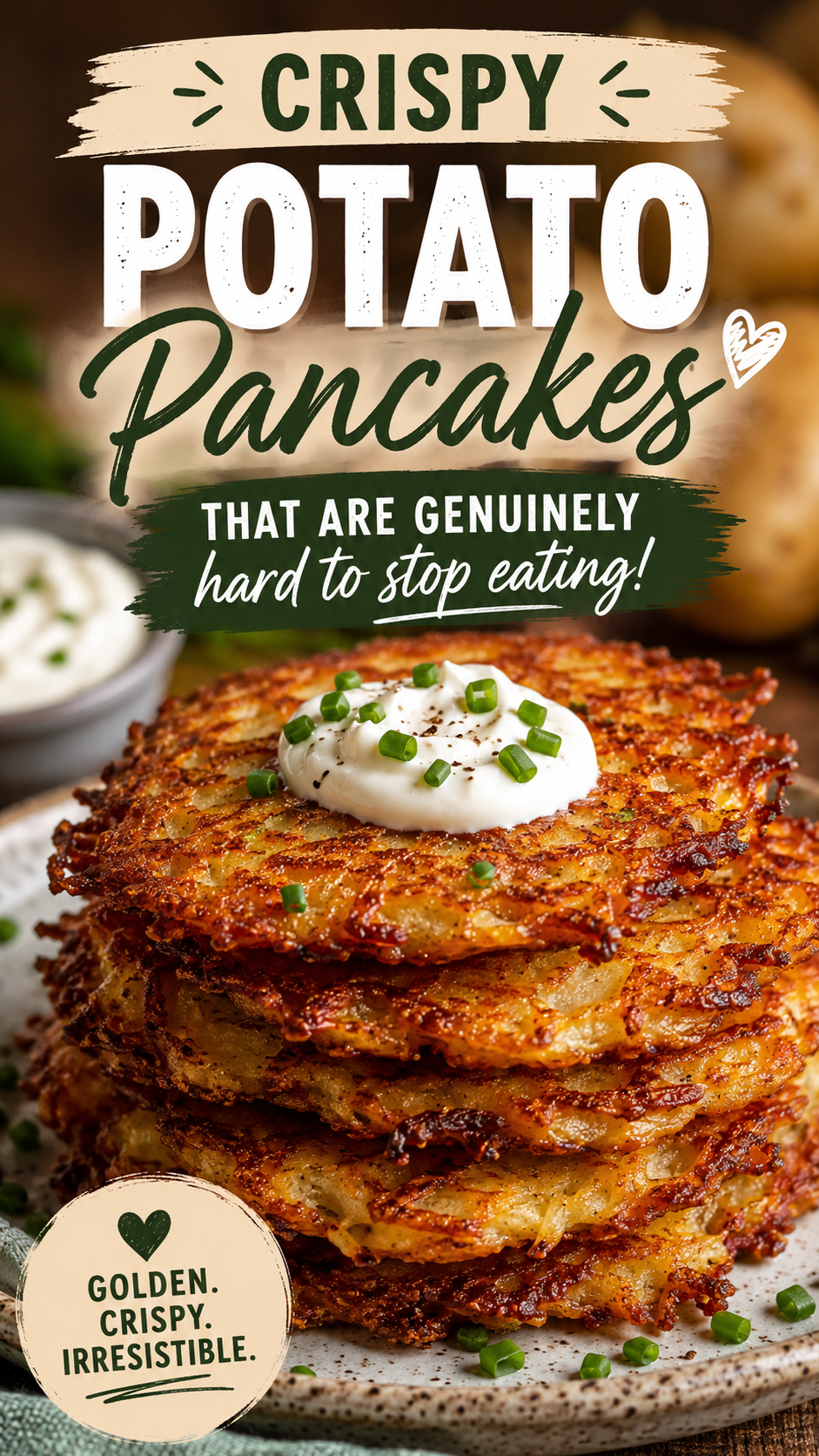
You’ve had potatoes a hundred different ways. Mashed, roasted, fried, baked. But the moment you pull your first batch of these out of the pan? Golden edges, crispy all the way through, soft in the center — you’ll wonder why you ever made potatoes any other way.
And before you scroll past thinking this is too basic: it’s not. There are a few tricks that completely change the texture, and I’ll share all of them.
Recipe at a Glance
| A | B |
|---|---|
| 🕐 Prep Time | 15 minutes |
| 🍳 Cook Time | 25–30 minutes |
| ⏱ Total Time | 40–45 minutes |
| 🍽 Servings | 3–4 people |
| 🥞 Yield | About 12 pancakes (3 per person) |
| 📊 Difficulty | Easy |
Serving notes:
- As a main dish (breakfast or light dinner): serves 2–3 people
- As a side dish (alongside eggs, chicken, or salad): serves 4–6 people
- For a party snack platter: easily stretch to 8–10 people by making a double batch
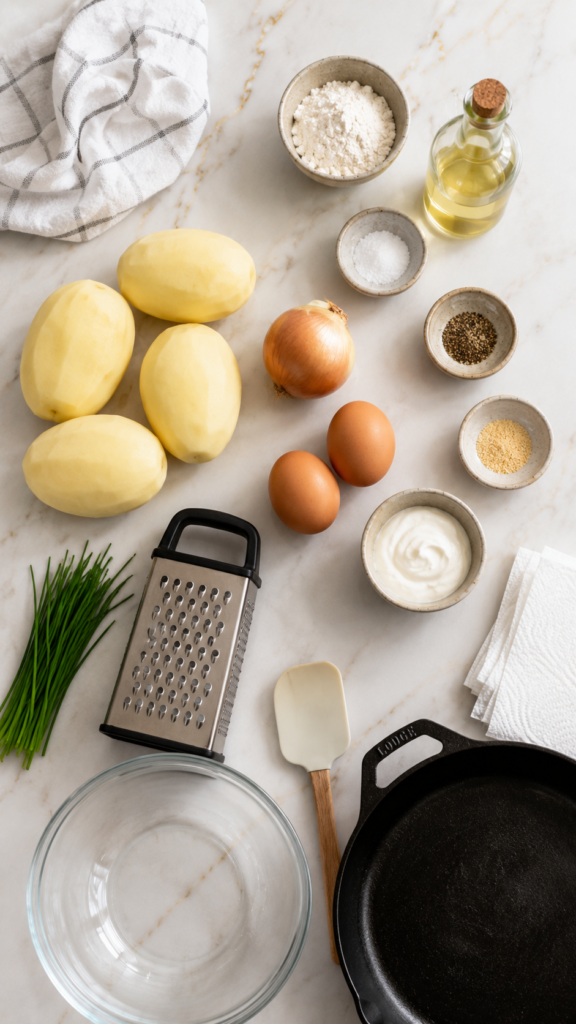
What You’ll Need
For the pancakes:
- 4 medium russet potatoes (about 2 lbs / 900g), peeled
- 1 small yellow onion
- 2 large eggs
- 3 tablespoons all-purpose flour
- 1 teaspoon salt
- ½ teaspoon black pepper
- ¼ teaspoon garlic powder (optional, but really good)
- Neutral oil for frying (vegetable, canola, or avocado oil)
For serving (pick your favorite):
- Sour cream
- Applesauce
- Fresh chives, chopped
- Smoked salmon (fancy option)
Tools You’ll Need
- Box grater or food processor with grating blade
- Large mixing bowl
- Clean kitchen towel or cheesecloth (non-negotiable — more on this below)
- Large skillet or cast iron pan
- Spatula
- Paper towels
- Measuring spoons
Pro Tips
These are the things that took my potato pancakes from “fine” to actually really good.
1. Squeeze out as much moisture as you possibly can. Seriously, go harder than you think you need to. Wet potatoes = soggy pancakes. Use a clean kitchen towel, wring it out twice, and then do it once more for good measure. The drier the shreds, the crispier the final result.
2. Grate the onion directly into the potatoes. It blends in completely and adds flavor without chunks. No one wants a big raw onion piece in every bite.
3. Don’t overcrowd the pan. Give each pancake real estate. If they’re touching, they steam instead of fry, and you lose that crispy edge entirely. Work in batches — it’s worth it.
4. Keep them warm in the oven. Place finished pancakes on a wire rack set over a baking sheet in a 200°F (93°C) oven. They stay crispy while you finish the rest of the batch.
5. Don’t press them too thin. About ¼ inch thick is the sweet spot. Too thin and they break apart. Too thick and the center stays raw while the outside burns. ¼ inch hits every time.
Instructions
Step 1: Grate the Potatoes and Onion
Peel your potatoes and grate them using the large holes of a box grater (or food processor). Grate the onion into the same bowl.
Step 2: Squeeze Out the Moisture — Really Get In There
Transfer the grated potato and onion mixture into a clean kitchen towel. Gather the edges, twist it closed, and squeeze hard over the sink. Keep going until the liquid slows to a trickle. This step directly determines how crispy your pancakes get, so don’t rush it.
Step 3: Mix the Batter
In a large bowl, combine the squeezed potato mixture with:
- 2 eggs
- 3 tablespoons flour
- 1 teaspoon salt
- ½ teaspoon black pepper
- ¼ teaspoon garlic powder (if using)
Mix until everything is evenly combined.
Step 4: Heat the Oil
Pour about ¼ inch of oil into a large skillet over medium-high heat. You’ll know it’s ready when a tiny shred of potato dropped in sizzles immediately.
Step 5: Form and Fry
Scoop about ¼ cup of the mixture and place it into the oil. Press it gently into a round disk, about ¼ inch thick. Fry for 3-4 minutes per side without touching them. You want a deep golden brown before you flip.
Work in batches of 3-4 pancakes at a time. Don’t rush this part.
Step 6: Drain and Keep Warm
Transfer finished pancakes to a paper towel-lined plate to drain briefly, then move them to the wire rack in the warm oven while you finish cooking the rest.
Step 7: Serve Immediately
Pile them up and serve right away with sour cream, applesauce, chives, or all of the above.
Substitutions and Variations
Different potato types: Russets are ideal because of their high starch content, but Yukon Golds work too and give a slightly creamier center. Avoid waxy potatoes like red potatoes — too much moisture.
Make it gluten-free: Swap the all-purpose flour for potato starch or a 1:1 gluten-free flour blend. Potato starch actually gives an even crispier result.
Make it dairy-free: These pancakes have no dairy in them by default. Just serve with a dairy-free sour cream alternative.
Add-ins to try:
- Shredded zucchini (squeeze the moisture out of that too)
- Finely diced jalapeño for heat
- Fresh dill mixed into the batter
- Shredded parmesan mixed in before frying
Herbed version: Add 2 tablespoons of fresh chopped chives or parsley directly into the batter.
Make-Ahead Tips
Prep the potatoes early: You can grate and squeeze the potatoes up to 2 hours ahead. Store them covered in the fridge. Add the eggs, flour, and seasonings right before frying so the batter stays fresh.
Freeze cooked pancakes: Let them cool completely, then freeze in a single layer on a baking sheet. Once frozen, transfer to a zip-lock bag. They keep for up to 2 months. Reheat in a 400°F oven for 10-12 minutes directly from frozen and they crisp back up beautifully.
Nutritional Info (Per Pancake, Approximate)
| Per Pancake | |
|---|---|
| Calories | ~120 kcal |
| Carbohydrates | 14g |
| Protein | 3g |
| Fat | 6g |
| Fiber | 1g |
| Sodium | 200mg |
Based on a batch of 12 pancakes. Toppings not included.
Diet notes:
- Naturally gluten-free when made with potato starch
- Vegetarian-friendly
- Can be made vegan by replacing eggs with flax eggs (1 tbsp ground flaxseed + 3 tbsp water per egg, rested 5 minutes)
Meal Pairing Suggestions
Potato pancakes are one of those dishes that work at basically any meal.
For breakfast: Serve with fried eggs and a side of bacon. The sour cream doubles as a sauce.
For lunch: Stack them with smoked salmon, a dollop of sour cream, and fresh dill. Feels a little fancy for zero extra effort.
For dinner: Pair alongside roasted chicken, pot roast, or a simple green salad. They hold up really well as a side dish.
As a snack: Serve a small stack with applesauce. Honestly one of my favorite combos on this list.
Leftovers and Storage
Fridge: Store in an airtight container for up to 3 days.
To reheat: Skip the microwave — it makes them soggy. Use a skillet over medium heat with a tiny bit of oil for 2-3 minutes per side, or pop them in a 400°F oven for 8-10 minutes. They’ll crisp right back up.
Freezer: As mentioned above, freeze in a single layer first, then bag them. Good for up to 2 months.
FAQ
Why are my potato pancakes falling apart? Usually one of two things: not enough binding (add an extra egg or a little more flour) or too much moisture left in the potatoes. Go back and squeeze harder next time.
Can I bake these instead of frying? Technically yes, but they won’t be as crispy. If you want to try it, brush both sides lightly with oil and bake at 425°F (220°C) for 20-25 minutes, flipping halfway through.
Do I have to peel the potatoes? No, but the texture is better when you do. The skin can make the shreds harder to bind together.
My pancakes are browning too fast on the outside but raw in the center — what’s happening? Your oil is too hot. Lower the heat to medium and let them cook a bit slower. The inside needs time to cook through before the outside gets too dark.
Can I use sweet potatoes? Yes! Sweet potato pancakes are delicious. They’re a bit sweeter and softer, but they follow the same exact process. Just squeeze them really well since sweet potatoes hold a lot of moisture.
What oil is best for frying? Any neutral, high-smoke-point oil works well. Vegetable, canola, sunflower, or avocado oil are all great choices. Avoid olive oil — it burns at the temperatures you need for a good crisp.
Can I make these ahead for a party? Absolutely. Fry them all, keep them warm in the oven on a wire rack, and serve when ready. They hold up well for about an hour in a 200°F oven without losing crispiness.
Wrapping Up
These potato pancakes are one of those recipes that sound simple but actually deliver every single time. Crispy edges, soft centers, endlessly customizable — they work for breakfast, dinner, or that random Tuesday when you just want something really satisfying.
Give them a try this week. And when you do, drop a comment below and let me know how they turned out. Did you do sour cream or applesauce? Did you add any fun mix-ins? Any questions along the way? I read every single comment and love hearing how your kitchen adventures go.