You’ve had dry pound cake before. You know the kind — the one that sits in your mouth like chalk and makes you reach for a glass of water after every bite.
This is not that cake.
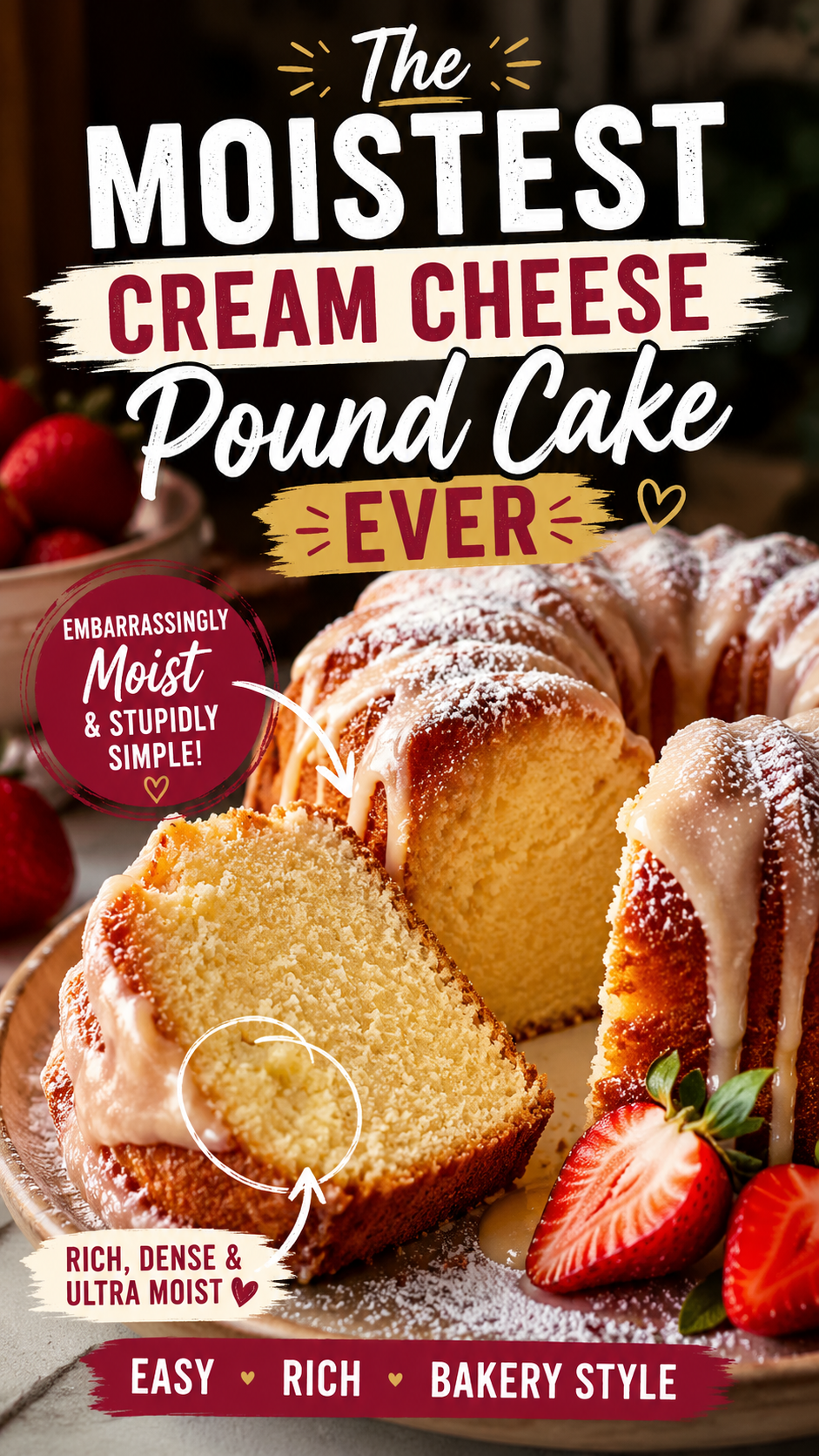
This cream cheese pound cake is dense, buttery, and so moist it almost feels wrong. The kind of cake that makes people ask you what bakery you got it from, and you get to casually say, “Oh, I made it.”
And the secret? Cream cheese. Full-fat, no compromises, block-style cream cheese mixed right into the batter. It completely changes the texture in the best way possible. 😍
Here’s the thing though — most people overthink pound cake. They assume it’s fussy or complicated, and they skip it entirely. It’s actually one of the more forgiving cakes you can make, and the results are genuinely impressive.
Keep reading, because there’s a pro tip in here that will change how all your cakes turn out from here on.
Recipe at a Glance
| Detail | Info |
|---|---|
| Prep Time | 20 minutes |
| Bake Time | 75–85 minutes |
| Total Time | ~1 hour 45 minutes |
| Servings | 12–14 slices |
| Skill Level | Beginner-friendly |
| Equipment Needed | Stand or hand mixer, loaf or bundt pan |
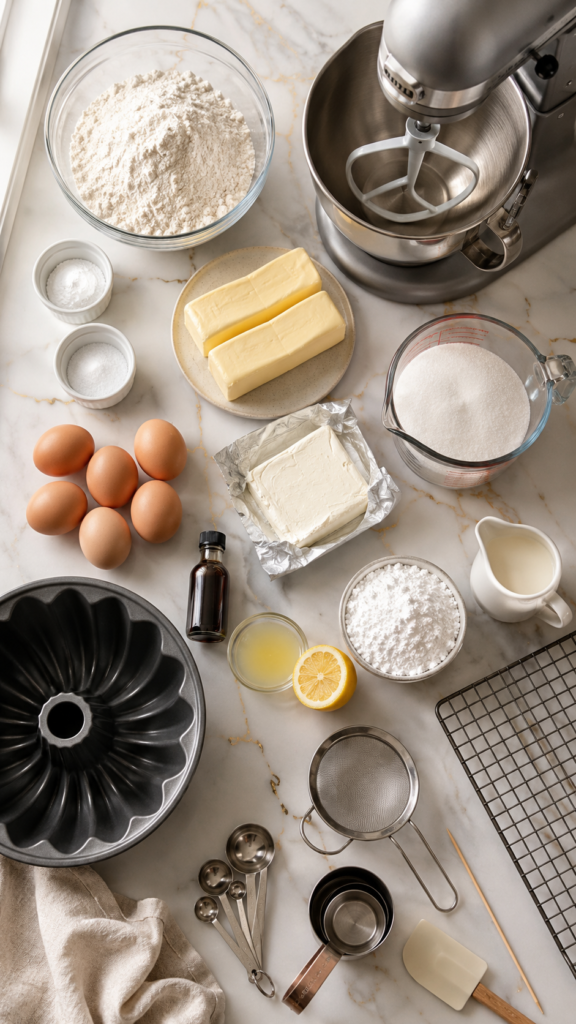
What You’ll Need
For the Cake
- 3 cups all-purpose flour (sifted)
- 1/2 tsp baking powder
- 1/2 tsp fine sea salt
- 1 cup (2 sticks / 226g) unsalted butter, room temperature
- 8 oz (226g) full-fat cream cheese, room temperature
- 3 cups granulated white sugar
- 6 large eggs, room temperature
- 1 tbsp pure vanilla extract
- 1 tbsp fresh lemon juice (optional, but adds a brightness that’s chef’s kiss)
Optional Glaze
- 1 cup powdered sugar
- 2–3 tbsp whole milk or heavy cream
- 1/2 tsp vanilla extract
Tools You’ll Need
- Stand mixer or hand mixer with paddle attachment
- Large mixing bowl
- Medium mixing bowl
- Rubber spatula
- Bundt pan (10–12 cup) or 9×5 loaf pan
- Measuring cups and spoons
- Sifter or fine mesh strainer
- Cooling rack
- Toothpick or skewer (for testing doneness)
Pro Tips
These are the things I wish someone had told me before I made my first pound cake.
- Room temperature everything. Cold butter and cold cream cheese = lumpy batter. Pull them out at least an hour before you start. This is non-negotiable if you want a smooth, even crumb.
- Cream the butter and cream cheese until it’s almost white. This takes about 4–5 minutes in a stand mixer on medium-high speed. Most people stop too early. That pale, fluffy mixture is where all the texture magic begins.
- Add eggs one at a time. Seriously, one at a time. Wait until each egg is fully incorporated before adding the next. Rushing this step can curdle the batter, and you’ll lose that beautiful, silky texture.
- Do not open the oven for the first hour. Pound cake needs a stable temperature to rise properly. Every time you crack the oven, you’re releasing heat and risking a sunken center.
- Let it cool completely before slicing. I know it smells incredible. I know. But cutting into it warm can make it gummy. Give it at least an hour on the rack.
Substitutions and Variations
This recipe is flexible in ways that might surprise you.
Butter alternatives:
- Swap half the butter for sour cream to make it even more tender
- Use salted butter and skip the added salt
Sugar swaps:
- Replace up to 1/2 cup of white sugar with light brown sugar for a slight caramel note
- Use superfine sugar for an ultra-smooth crumb
Flour options:
- Cake flour instead of all-purpose makes it lighter and more delicate
- For gluten-free: use a 1:1 GF flour blend (results vary by brand)
Flavor variations:
- Lemon pound cake: Add 2 tbsp lemon zest + 2 tbsp fresh lemon juice
- Almond: Replace half the vanilla with almond extract
- Marble: Swirl in 3 tbsp cocoa powder mixed with 2 tbsp melted butter
Make-Ahead Tips
Pound cake is genuinely one of the best desserts to make ahead because it actually improves overnight.
- Make it 1–2 days early. Wrap it tightly in plastic wrap once fully cooled. The flavors deepen and the texture gets even more moist by day two.
- Freeze it whole. Wrap in plastic wrap, then a layer of foil. Freezes beautifully for up to 3 months. Thaw overnight on the counter.
- Freeze individual slices. Great for grabbing one at a time without defrosting the whole cake.
How to Make It
Step 1: Prep Your Pan and Oven
Preheat your oven to 325°F (163°C).
Grease your bundt or loaf pan very thoroughly with butter or baking spray, then dust it lightly with flour. Make sure you get every ridge if using a bundt pan — this step saves you from a heartbreaking stuck cake situation.
Step 2: Mix Dry Ingredients
In a medium bowl, whisk together your sifted flour, baking powder, and salt. Set aside.
Step 3: Cream Butter, Cream Cheese, and Sugar
In a large bowl using a stand or hand mixer, beat the room-temperature butter and cream cheese together on medium-high speed for 4–5 minutes until the mixture is very pale and fluffy.
Add the sugar and beat for another 2–3 minutes. Scrape down the sides of the bowl as needed.
Step 4: Add Eggs
Add the eggs one at a time, beating well after each addition. Don’t rush this.
Mix in the vanilla extract and lemon juice.
Step 5: Add the Flour
Reduce the mixer to low speed. Add the flour mixture in 3 additions, mixing just until each addition is incorporated. Do not overmix — overmixing develops gluten and leads to a tough cake.
The batter will be thick. That’s perfect.
Step 6: Bake
Pour the batter into your prepared pan and smooth the top with a spatula.
Bake at 325°F for 75–85 minutes, or until a toothpick inserted in the center comes out clean (a few moist crumbs are fine — wet batter is not).
The top should be golden brown and starting to pull away from the edges.
Step 7: Cool
Let the cake cool in the pan for 15 minutes, then flip it out onto a cooling rack. Let it cool for at least 1 full hour before slicing or glazing.
Optional: Make the Glaze
Whisk powdered sugar, milk (or cream), and vanilla extract together until smooth. Drizzle over the cooled cake.
Nutritional Breakdown (Per Slice, Approx.)
Based on 14 slices, no glaze
| Nutrient | Amount |
|---|---|
| Calories | ~420 |
| Total Fat | 22g |
| Saturated Fat | 13g |
| Carbohydrates | 52g |
| Sugar | 36g |
| Protein | 6g |
| Cholesterol | 135mg |
| Sodium | 160mg |
Note: these are estimates. Exact values will vary based on brands and any substitutions used.
Dietary Swaps
| Diet | Swap |
|---|---|
| Dairy-free | Use vegan butter + dairy-free cream cheese (Violife or Kite Hill work well) |
| Gluten-free | Use a 1:1 GF all-purpose flour blend |
| Lower sugar | Reduce sugar to 2.5 cups (texture will be slightly denser) |
| Egg-free | Untested — pound cake relies heavily on eggs for structure |
Meal Pairing Ideas
This cake plays really well with others. A few combos worth trying:
- Fresh berries + whipped cream — classic, no explanation needed
- Vanilla or strawberry ice cream — warm cake + cold ice cream is never a bad idea
- A drizzle of lemon curd — if you went the lemon variation route
- Espresso or black coffee — the richness of the cake cuts right through bitterness
- A glass of sweet Riesling or Moscato — for when you want to feel fancy on a Tuesday
Leftovers and Storage
This cake keeps beautifully, which honestly makes it one of my favorite things to bake.
- Room temperature: Store wrapped tightly in plastic wrap for up to 3 days
- Refrigerator: Keeps for up to 1 week — bring it to room temperature before eating for best texture
- Freezer: Up to 3 months (wrap individual slices in plastic, then store in a zip-lock bag)
Quick tip: If the cake starts drying out, wrap a slice with a damp paper towel and microwave for 15 seconds. It won’t be like day one, but it’s close.
FAQ
Can I use a loaf pan instead of a bundt pan? Yes, a standard 9×5 loaf pan works great. You might need to divide the batter between two pans depending on the size, and check for doneness around the 60–70 minute mark.
My batter looks curdled after adding the eggs. Is that okay? Usually yes — adding the flour will bring it back together. But to avoid this next time, make sure your eggs are at room temperature before you start.
Can I add mix-ins like blueberries or chocolate chips? Absolutely. Toss them in 1 tbsp of flour before folding them in so they don’t sink to the bottom.
My cake stuck to the pan. What went wrong? Most likely the pan wasn’t greased and floured well enough, or the cake didn’t cool in the pan long enough before flipping. Grease every single nook if using a bundt pan.
Why did my pound cake crack on top? That crack is completely normal and actually a good sign — it’s how pound cakes release steam and rise. A big crack down the center means you did it right.
Can I make this without a mixer? You can, but it’ll be an arm workout. The key steps (creaming butter + cream cheese + sugar, adding eggs) really benefit from an electric mixer for the right texture.
Can I halve the recipe? Yes. Use a 9×5 loaf pan and start checking for doneness around the 50-minute mark.
Wrapping Up
Here’s the honest truth: once you make this cake, you’ll have a hard time going back to any other pound cake.
It’s the one people will request at birthdays, holidays, and random Sunday afternoons. The one that gets eaten before you even get to put the glaze on it. The one where someone will inevitably ask for the recipe, and you’ll feel like you have a little secret weapon in your kitchen.
It takes a little patience — especially waiting for it to cool — but every single minute is worth it.
Now go make it. And when you do, come back and drop a comment below. I want to know how it went, what variations you tried, and whether you managed to wait the full hour before cutting into it. (No judgment if you didn’t. I’ve been there.)