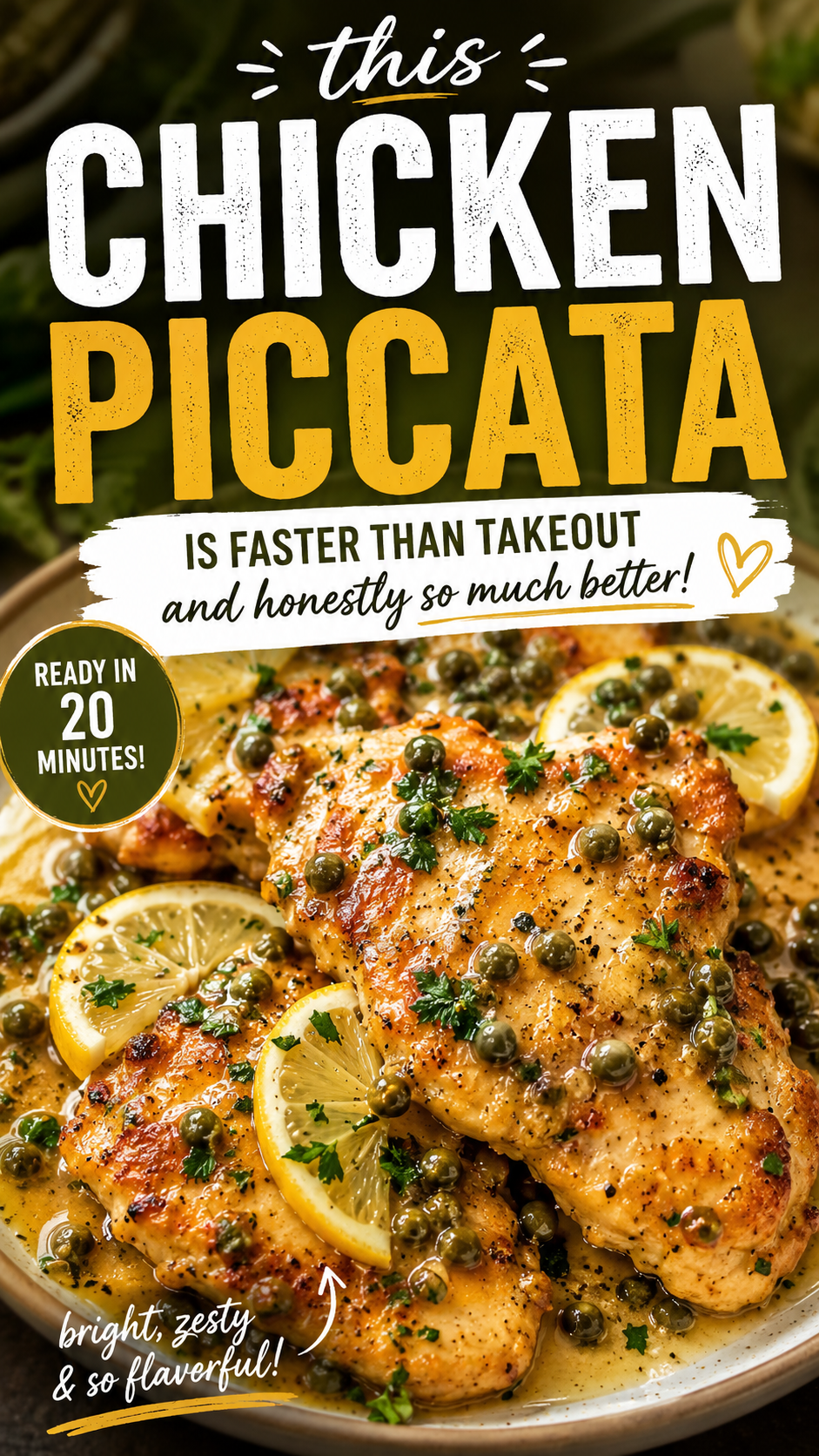
Hot take: most people have never actually had good chicken piccata.
They’ve had the dry, sad, restaurant version that arrives on a plate with a single sad lemon wedge and a caper or two floating in thin sauce. And they call it a day.
This is not that. 😤
This chicken piccata is silky, buttery, bright, and deeply savory all at once. It comes together in under 30 minutes, uses one pan, and tastes like the kind of dinner you’d order somewhere fancy and then think about for days after.
Keep reading, because there’s a technique in the sauce section most recipes skip, and it makes all the difference.
| Detail | Info |
|---|---|
| Prep Time | 10 minutes |
| Cook Time | 20 minutes |
| Total Time | 30 minutes |
| Servings | 4 |
| Difficulty | Easy |
| Cuisine | Italian-American |
What You’ll Need
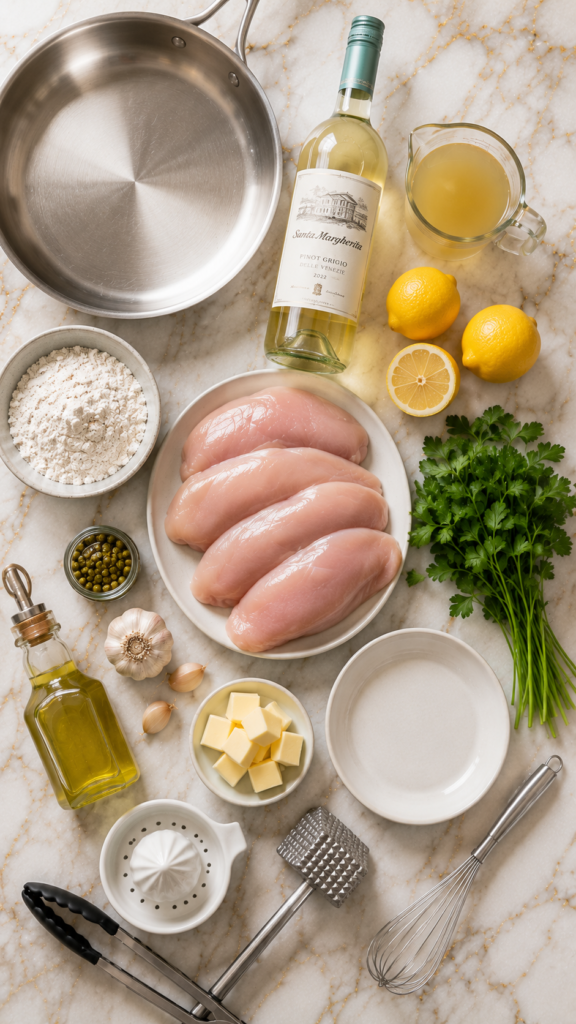
You likely have most of this already. The caper situation is the only thing that might require a quick grocery run.
For the Chicken
- 4 boneless, skinless chicken breasts (about 6 oz each)
- 1/2 cup all-purpose flour
- 1 teaspoon kosher salt
- 1/2 teaspoon black pepper
- 1/2 teaspoon garlic powder
- 3 tablespoons olive oil
- 2 tablespoons unsalted butter (for pan-frying)
For the Piccata Sauce
- 3 tablespoons unsalted butter (cold, cut into cubes)
- 4 cloves garlic, minced
- 1/2 cup dry white wine (Pinot Grigio or Sauvignon Blanc work great)
- 1/2 cup chicken broth (low sodium)
- 1/4 cup fresh lemon juice (about 2 large lemons)
- 3 tablespoons capers, drained and rinsed
- 2 tablespoons fresh flat-leaf parsley, chopped
- Lemon slices for serving
Tools You’ll Need
- 1 large skillet or sauté pan (12-inch works perfectly)
- Meat mallet or rolling pin
- Shallow bowl or plate for dredging
- Sharp knife and cutting board
- Tongs
- Measuring cups and spoons
- Citrus juicer (optional but helpful)
- Whisk
Pro Tips
Tip 01
Pound your chicken thin. This is non-negotiable. Aim for about 1/2 inch thickness. It cooks faster, more evenly, and actually stays juicy instead of drying out by the time the center is cooked through.
Tip 02
Cold butter = silky sauce. When you add butter to finish the sauce, it needs to be cold and added off the heat (or very low heat). This creates an emulsion that gives the sauce that glossy, restaurant-quality look. Hot butter just breaks and goes greasy.
Tip 03
Don’t skip the fond. After you cook the chicken, those golden bits stuck to the pan are pure flavor. The wine deglazes them right up. This is where most of the depth comes from.
Tip 04
Rinse your capers. They come packed in brine that’s intensely salty. A quick rinse means you control the salt level, not the jar.
Tip 05
Fresh lemon only. Bottled lemon juice is flat and slightly bitter. Fresh lemon has a brightness that makes this dish pop. Two lemons, freshly squeezed. Worth the 30 extra seconds.
How to Make It
- Prep the chicken – Place each chicken breast between two sheets of plastic wrap. Pound to about 1/2-inch thickness using a meat mallet or rolling pin. Pat dry with paper towels. This dryness is important for getting a golden crust.
- Season and dredge – In a shallow bowl, mix the flour, salt, pepper, and garlic powder. Coat each chicken piece in the flour mixture, shaking off any excess. You want a light, even coat, not thick breading.
- Get the pan hot – Heat olive oil and 2 tablespoons of butter in a large skillet over medium-high heat. You want it shimmering and hot before the chicken goes in. A test: drop a tiny bit of flour in. If it sizzles, you’re ready.
- Cook the chicken – Add chicken pieces without crowding the pan (work in batches if needed). Cook for 3 to 4 minutes per side until golden brown and cooked through (internal temp 165°F). Transfer to a plate and tent loosely with foil.
- Build the sauce – Lower heat to medium. Add garlic to the same pan and cook for 30 seconds until fragrant. Pour in white wine and scrape up all those golden bits from the bottom of the pan. Let it reduce by half, about 2 minutes.
- Add broth and lemon – Pour in the chicken broth and lemon juice. Stir and let the sauce simmer for another 3 to 4 minutes, until it thickens slightly. Add the capers and stir to combine.
- Finish with cold butter – Remove the pan from heat. Add the cold butter cubes one at a time, swirling the pan (or whisking gently) as each melts in. This is the move that makes the sauce glossy and velvety. Taste and adjust salt if needed.
- Bring it together – Return the chicken to the pan and spoon the sauce over each piece. Garnish with fresh parsley and lemon slices. Serve immediately.
Substitutions and Variations
| Ingredient | Swap It For | Notes |
|---|---|---|
| Chicken breasts | Chicken thighs (boneless) | More forgiving, richer flavor |
| White wine | Extra chicken broth + 1 tsp white wine vinegar | Alcohol-free option |
| All-purpose flour | Gluten-free 1:1 flour | Works almost identically |
| Butter | Dairy-free butter (Miyoko’s) | Good for dairy-free version |
| Capers | Green olives, roughly chopped | Milder, slightly different vibe |
| Parsley | Fresh basil or chives | Both work beautifully |
Want it creamier? Stir in 2 tablespoons of heavy cream right before the cold butter step. It transforms the sauce into something even more luxurious.
Veal piccata: Traditionally, piccata was actually made with veal. You can swap thinly sliced veal cutlets using the exact same method.
Make-Ahead Tips
You can pound and flour the chicken up to a day ahead. Store the dredged pieces on a parchment-lined sheet pan, covered, in the fridge.
The sauce doesn’t hold as well, since butter-based sauces can separate when refrigerated and reheated. It’s best made fresh, but it only takes about 10 minutes once the chicken is prepped.
Nutrition Breakdown
| Per Serving | Amount |
|---|---|
| Calories | ~390 kcal |
| Protein | 38g |
| Carbohydrates | 12g |
| Fat | 18g |
| Sodium | ~620mg |
| Fiber | 0.5g |
Values are estimates and vary based on exact portions and ingredients used.
What to Serve It With
Chicken piccata is one of those dishes that plays nicely with almost anything.
- Angel hair pasta tossed in a little olive oil is the classic move
- Creamy mashed potatoes to soak up all that sauce
- Roasted asparagus or green beans for something lighter
- Crusty bread because that sauce deserves to be mopped up
- Risotto if you’re going all-in on an Italian dinner night
Leftovers and Storage
Store leftover chicken piccata in an airtight container in the refrigerator for up to 3 days.
To reheat, warm gently in a skillet over low heat with a splash of chicken broth to help revive the sauce. Avoid the microwave if you can, as it tends to make the chicken rubbery and separates the butter sauce.
The sauce may thicken in the fridge, which is totally normal. Adding a tablespoon or two of warm broth brings it right back.
Freezing: Not recommended for this one. The butter sauce doesn’t freeze well and the texture of the dredged chicken changes after thawing.
FAQ
Can I use chicken thighs instead of breasts?
Absolutely. Boneless, skinless thighs work great and are actually harder to overcook. Just pound them to an even thickness and follow the same steps.
What wine should I use?
A dry white wine like Pinot Grigio, Sauvignon Blanc, or Chardonnay all work well. The rule of thumb: cook with something you’d actually drink. Avoid anything labeled “cooking wine” as they contain added salt and preservatives.
My sauce seems too thin. What went wrong?
Let it reduce longer before adding the butter. The broth and wine need to cook down to concentrate. If it’s still thin after the butter, mix 1 teaspoon of cornstarch with 1 tablespoon of cold water and whisk it in quickly over low heat.
Do I have to use capers?
Technically, no, but they’re a big part of what makes piccata, piccata. They add a briny, tangy punch that balances the butter and lemon. If you really dislike them, chopped green olives are a reasonable substitute.
Is piccata the same as marsala?
Nope! Chicken marsala uses Marsala wine and mushrooms for a deeper, earthier flavor profile. Piccata uses white wine and lemon for something brighter and more acidic. Both are Italian-American classics, but they taste completely different.
My chicken didn’t get golden. Why?
The pan probably wasn’t hot enough, or the chicken was too wet before dredging. Always pat the chicken very dry before flouring it, and make sure the oil is shimmering before anything hits the pan.
Wrapping Up
Chicken piccata is one of those recipes that feels impressive but genuinely couldn’t be simpler. One pan, 30 minutes, and you’ve got dinner that tastes like you actually tried. 😄
The combination of lemon, butter, and capers is one of those flavor combos that just works every single time. Once you get comfortable with the sauce technique, you’ll start using it on everything.
Give it a go this week and come back to leave a comment. I’d love to know how it turned out for you, what you served it with, or any tweaks you made along the way. And if you have questions, drop them below. Always happy to help!