Most people think restaurant-quality Alfredo is some complicated, chef-only achievement. It’s not. It takes under 30 minutes, uses ingredients you probably already have, and tastes so much better than anything you’d get from a jar.
And once you know the trick to making the sauce silky and smooth every time? You’ll never reach for the jarred stuff again.
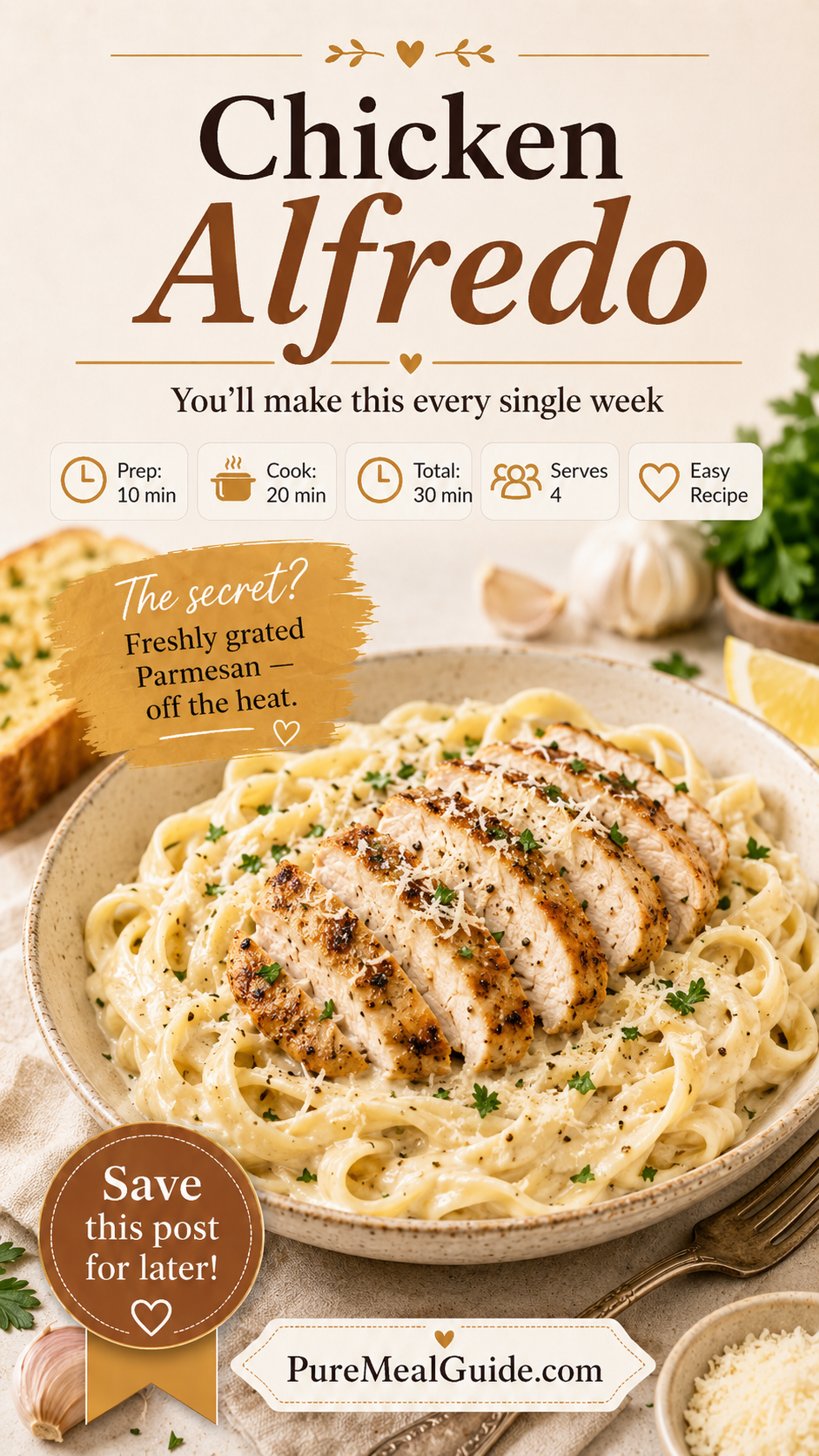
Recipe at a Glance
| Detail | Info |
|---|---|
| Prep Time | 10 minutes |
| Cook Time | 20 minutes |
| Total Time | 30 minutes |
| Servings | 4 |
| Difficulty | Easy |
| Best For | Weeknight dinners, date night at home |
Why This One Actually Works
A lot of Alfredo recipes either turn out too thin, too heavy, or weirdly grainy. This version hits the right balance.
The secret is using freshly grated Parmesan (not the green can), finishing the pasta in the sauce so it absorbs all that flavor, and not overcooking the chicken. Every step matters, but none of them are complicated.
Keep reading because there’s a tip in the Pro Tips section that changes everything about how the sauce comes together.
What You’ll Need
For the Chicken:
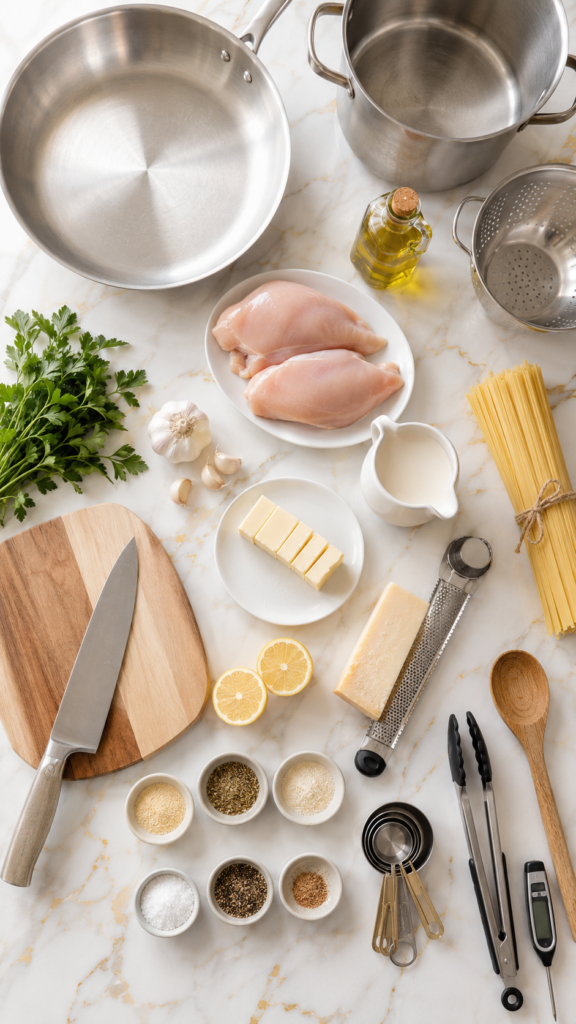
- 2 large boneless, skinless chicken breasts (about 1.5 lbs)
- 1 teaspoon garlic powder
- 1 teaspoon Italian seasoning
- ½ teaspoon onion powder
- ½ teaspoon salt
- ¼ teaspoon black pepper
- 2 tablespoons olive oil
For the Alfredo Sauce:
- 4 tablespoons unsalted butter
- 4 cloves garlic, minced
- 2 cups heavy cream
- 1½ cups freshly grated Parmesan cheese (plus more for serving)
- ½ teaspoon salt (adjust to taste)
- ¼ teaspoon black pepper
- ¼ teaspoon nutmeg (optional but really good)
For the Pasta:
- 12 oz fettuccine (or linguine)
- 1 tablespoon salt (for the pasta water)
- ½ cup reserved pasta water
Optional Garnish:
- Fresh parsley, chopped
- Extra Parmesan
- Red pepper flakes
Tools You’ll Need
- Large pot (for boiling pasta)
- Large skillet or sauté pan (12-inch works best)
- Cutting board and sharp knife
- Meat thermometer (highly recommended)
- Colander
- Cheese grater or microplane
- Measuring cups and spoons
- Tongs
Pro Tips
These are the things that separate a good Alfredo from a really good one:
- Grate your own Parmesan. Pre-shredded cheese has anti-caking agents that prevent it from melting smoothly. Buy a block and grate it yourself. The difference is dramatic.
- Don’t skip the pasta water. That starchy water is what helps bind the sauce to the noodles. Reserve at least ½ cup before draining. It looks like nothing, but it does a lot of heavy lifting.
- Let the chicken rest before slicing. Five minutes on a cutting board after cooking makes a huge difference. Cut into it too soon and all those juices run out onto the board instead of staying in the meat.
- Keep the heat low when adding cream. High heat causes the sauce to separate and get greasy. Low and slow is the move here.
- Add Parmesan off the heat. This is the one most people skip. Turn the heat off before adding the cheese, then stir. It melts more evenly and keeps the sauce silky instead of grainy.
Substitutions and Variations
- No heavy cream? Half-and-half works but gives you a lighter, thinner sauce. For a richer version without heavy cream, use cream cheese (4 oz) and whole milk.
- Dairy-free? Full-fat coconut cream + nutritional yeast can work in a pinch, though the flavor profile changes.
- No fettuccine? Linguine, pappardelle, or spaghetti all work. Even rigatoni is great if you want something heartier.
- Want more protein? Shrimp instead of chicken is a classic swap and takes even less time to cook.
- Spice lovers: Add ½ teaspoon crushed red pepper flakes to the butter when you’re sautéing the garlic.
- Add veggies: Sautéed mushrooms, spinach, or roasted broccoli mix into the sauce really well.
Make-Ahead Tips
- Chicken: Cook the chicken breasts up to 2 days ahead. Slice and refrigerate in an airtight container. Reheat gently in a pan with a splash of chicken broth before adding to the pasta.
- Sauce: Alfredo sauce is best made fresh, but you can make it up to 1 day ahead. Reheat on low, adding a splash of cream or pasta water to loosen it up as it thickens in the fridge.
- Pasta: Cook the pasta and toss with a little olive oil to prevent sticking. Refrigerate separately and combine everything when you’re ready to serve.
How to Make Chicken Alfredo
Step 1: Season and cook the chicken
Pat the chicken dry with a paper towel (this helps it sear instead of steam).
Mix the garlic powder, Italian seasoning, onion powder, salt, and pepper in a small bowl. Rub it all over both sides of the chicken.
Heat the olive oil in a large skillet over medium-high heat. Add the chicken and cook for 6-7 minutes per side, until golden brown and the internal temperature hits 165°F.
Transfer to a cutting board and rest for 5 minutes, then slice thin.
Step 2: Cook the pasta
Bring a large pot of water to a boil. Add 1 tablespoon of salt (pasta water should taste like the sea).
Cook the fettuccine according to package instructions, but pull it 1 minute before the listed time since it’ll finish cooking in the sauce.
Before draining, scoop out ½ cup of pasta water and set it aside. Drain the pasta.
Step 3: Make the Alfredo sauce
In the same skillet used for the chicken (wipe it out but don’t wash it), melt the butter over medium-low heat.
Add the minced garlic and cook for 60-90 seconds, stirring constantly. Don’t let it brown.
Pour in the heavy cream and bring to a gentle simmer. Let it cook for 3-4 minutes, stirring frequently, until it reduces slightly.
Turn the heat off. Add the Parmesan, salt, pepper, and nutmeg (if using). Stir until the cheese melts completely and the sauce is smooth. If it looks too thick, add pasta water a splash at a time.
Step 4: Combine everything
Add the drained pasta to the sauce and toss to coat. Use tongs to really work the sauce into the noodles. Add pasta water as needed to reach your ideal consistency.
Add the sliced chicken on top (or toss it right in, whichever you prefer).
Serve immediately with extra Parmesan and fresh parsley.
Nutritional Breakdown (Per Serving, Approximate)
| Nutrient | Amount |
|---|---|
| Calories | ~780 kcal |
| Protein | ~48g |
| Carbohydrates | ~55g |
| Fat | ~38g |
| Saturated Fat | ~20g |
| Sodium | ~780mg |
| Fiber | ~2g |
Note: These are estimates based on the ingredient amounts listed. Actual values vary depending on specific brands used.
Diet Notes:
- Gluten-free: Swap regular fettuccine for a certified GF pasta. Everything else in this recipe is naturally gluten-free.
- Lower calorie: Use half-and-half instead of heavy cream and reduce butter by half.
- Higher protein: Add an extra chicken breast or toss in cooked shrimp.
Meal Pairing Suggestions
This is already a full meal, but if you want to round it out:
- Bread: Garlic bread or a crusty baguette to mop up the sauce (it’s worth every calorie)
- Salad: A simple Caesar or arugula salad with lemon vinaigrette cuts through the richness perfectly
- Wine: A chilled Pinot Grigio or unoaked Chardonnay works really well here
- Dessert: Something light, like a lemon sorbet or fresh fruit
Leftovers and Storage
- Refrigerate: Store in an airtight container for up to 3 days.
- Reheating: Low and slow is key. Add a splash of cream or milk and reheat on the stovetop over low heat, stirring frequently. Microwaving works too but stir every 30 seconds.
- Freezing: Not recommended. Cream-based sauces separate when frozen and thawed, and the texture gets grainy. This one’s best eaten fresh.
FAQ
Can I use chicken thighs instead of chicken breasts?
Absolutely. Boneless, skinless thighs actually stay juicier and have more flavor. They’ll take a few extra minutes to cook through, so check for that 165°F internal temperature.
My sauce turned out grainy. What went wrong?
Almost always one of two things: the heat was too high when you added the cheese, or you used pre-shredded Parmesan. Freshly grated cheese + heat off = silky sauce every time.
Can I use milk instead of heavy cream?
You can, but the sauce won’t be as rich or thick. Whole milk works better than skim. If using milk, you may want to whisk in a teaspoon of cornstarch to help it thicken.
What’s the best pasta shape for Alfredo?
Fettuccine is traditional because its flat, wide shape holds the sauce well. Linguine is a great runner-up. Avoid very thin pasta like angel hair since the sauce slides right off.
How do I keep the sauce from getting too thick while I’m cooking the pasta?
Timing helps here. Make the sauce last and have everything else ready to go. If the sauce does thicken before you’re ready, add pasta water a tablespoon at a time and stir over low heat.
Is this kid-friendly?
Very. It’s mild, creamy, and familiar. If you’re cooking for picky eaters, skip the nutmeg and red pepper flakes.
Wrapping Up
This chicken Alfredo is the kind of recipe that earns a permanent spot in your rotation. It looks fancy, it tastes incredible, and it comes together faster than most people expect.
The biggest thing I want you to walk away with? Grate the Parmesan yourself and pull the pan off the heat before adding it. Those two steps alone are the difference between restaurant-quality and “it’s fine.”
Give it a try this week and drop a comment below with how it turned out. Did you make any swaps? Add anything to the sauce? I’d genuinely love to know.