I tried baghrir for the first time at a tiny café in Marrakech, and I genuinely couldn’t figure out what I was eating.
They looked like pancakes. Kind of. But they were covered in hundreds of tiny holes, almost like a sponge, and they had this soft, almost creamy texture that no pancake I’d ever had came close to.
Then someone poured warm honey-butter over the top and I was done. That was it.
If you’ve never heard of Moroccan baghrir before, you’re not alone. But you’ll want to make them this weekend. Possibly every weekend after that.
Recipe at a Glance
| Detail | Info |
|---|---|
| Prep Time | 10 minutes |
| Rest Time | 20-30 minutes |
| Cook Time | 20 minutes |
| Total Time | ~1 hour |
| Servings | 12-15 pancakes |
| Difficulty | Easy |
| Diet | Dairy-free (batter only), Vegan-adaptable |
What Makes Baghrir So Different?
Here’s the thing that surprised me: baghrir aren’t flipped.
You cook them on one side only. The batter is so airy and bubbly that the top sets itself without ever touching the pan. That’s how you get that signature honeycomb surface, hundreds of tiny holes that soak up whatever you drizzle on top.
They’re made with semolina flour, which gives them a slightly nutty, grainy flavor that regular all-purpose flour pancakes just don’t have. And the yeast in the batter? That’s what creates all those bubbles. It’s science you can eat. 🧪
Baghrir are traditionally served at breakfast or as a snack with warm honey and melted butter poured over the top. Some families add argan oil instead of butter. Some use jam. There’s no wrong answer here.
What You’ll Need
Dry Ingredients
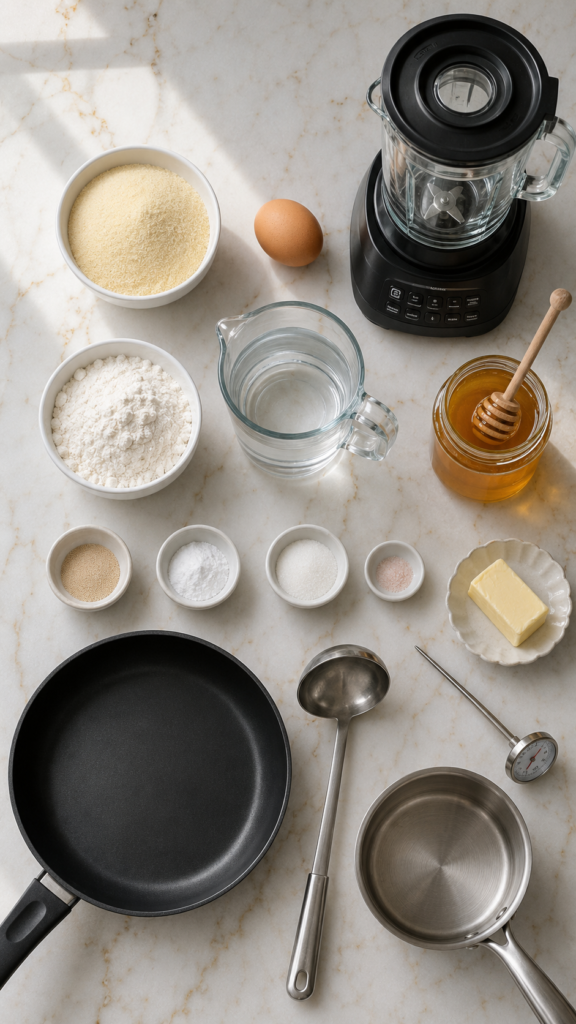
- 1 cup (160g) fine semolina flour
- ½ cup (60g) all-purpose flour
- 1 teaspoon instant yeast
- 1 teaspoon baking powder
- 1 teaspoon sugar
- ¼ teaspoon salt
Wet Ingredients
- 2 cups (480ml) warm water (around 110°F / 43°C)
- 1 egg
For Serving
- 4 tablespoons unsalted butter
- 3-4 tablespoons pure honey
Tools You’ll Need
- Blender or immersion blender
- Large mixing bowl
- Non-stick skillet or crêpe pan (8-10 inches)
- Ladle or ¼ cup measuring cup
- Small saucepan (for the honey-butter)
- Kitchen thermometer (optional but helpful for checking water temp)
Pro Tips
These are the things that actually make a difference when you’re making baghrir for the first time.
- Blend the batter, don’t whisk it. Blending creates a super smooth batter which is what gives you an even distribution of holes. Whisking by hand leaves lumps. Lumps = uneven holes = sad pancakes.
- The water temperature matters more than you think. Too hot and it kills the yeast. Too cold and the yeast doesn’t activate. Aim for warm bath water temperature, around 110°F / 43°C. If you don’t have a thermometer, it should feel warm but not uncomfortable on your wrist.
- Don’t rush the rest time. The batter needs 20-30 minutes to rest and bubble up. This is non-negotiable. If you pour it into the pan before the yeast has done its job, you won’t get the holes. Set a timer, walk away, make your coffee.
- The pan should be hot but not smoking. Medium heat. If the pan is too hot, the batter sets before the holes can form. Too cool and the pancake turns gummy. It takes one or two trial pancakes to find your sweet spot.
- Never flip them. I know it feels wrong. You’ll want to. Don’t. The top dries out on its own as the bottom cooks. The moment you see no more wet batter on the surface, it’s done.
Full Instructions
- Add the warm water and egg to your blender. Then add the semolina flour, all-purpose flour, yeast, baking powder, sugar, and salt.
- Blend on high for about 1 minute until the batter is completely smooth and slightly frothy.
- Pour the batter into a large bowl, cover with a clean towel, and let it rest for 20-30 minutes. You’ll see bubbles forming on the surface. That’s exactly what you want.
- While the batter rests, make your honey-butter topping. Melt the butter in a small saucepan over low heat, then stir in the honey until combined. Keep warm.
- Heat your non-stick skillet over medium heat. No oil or butter needed in the pan.
- Pour about ¼ cup of batter into the center of the pan without spreading it. Let it spread naturally.
- Cook for 2-3 minutes without flipping. The top will look completely dry and be covered in tiny holes when it’s ready.
- Slide onto a plate, drizzle with the honey-butter, and serve immediately.
- Repeat with the remaining batter. Do not stack the pancakes until you’re ready to serve or the steam will make them stick together.
Substitutions and Variations
For the flour:
- You can use all semolina flour if you want a grainier, more authentic texture
- All-purpose flour only works in a pinch but the texture won’t be as interesting
Yeast swap: If you only have active dry yeast, proof it first in the warm water with the sugar for 5-10 minutes before adding the rest of the ingredients.
Dairy-free: The batter itself is already dairy-free. Just swap the butter in the topping for coconut oil or vegan butter, and you’re good.
Toppings beyond honey-butter:
- Argan oil + honey (very traditional)
- Strawberry jam + cream cheese
- Peanut butter + honey (sounds weird, works perfectly)
- Amlou (a Moroccan almond-argan spread, if you can find it)
Make-Ahead Tips
The batter doesn’t store well after it’s been activated. Yeast is a living thing, and once it’s done its job, the batter will over-ferment in the fridge and turn sour.
If you want to prep ahead, measure and mix all your dry ingredients the night before and store them in a bowl. In the morning, add the warm water and egg, blend, rest, and cook. It saves you maybe 5 minutes but it’s something.
The honey-butter sauce can absolutely be made ahead and reheated gently when needed.
Nutritional Breakdown (Per Pancake, Approximate)
| Nutrient | Amount |
|---|---|
| Calories | ~95 kcal |
| Carbohydrates | 17g |
| Protein | 3g |
| Fat | 2g |
| Fiber | 0.5g |
These values are for the pancakes alone, without the honey-butter topping.
Meal Pairing Suggestions
Baghrir are typically a breakfast or afternoon tea food in Morocco. Pair them with:
- Moroccan mint tea (the classic pairing, non-negotiable)
- Strong black coffee if you’re not a tea person
- Fresh fruit on the side to balance the sweetness
- A simple yogurt bowl if you want something more filling
Leftovers and Storage
Leftover baghrir keep really well. Let them cool completely, then:
- Refrigerate in an airtight container for up to 3 days
- Freeze with parchment paper between each one for up to 1 month
To reheat: pop them in a dry skillet over low heat for about 30 seconds per side, or microwave for 15-20 seconds covered with a damp paper towel. They come back to life surprisingly well.
Don’t reheat with the honey-butter already on them. Always reheat plain, then add the topping fresh.
FAQ
Why don’t my baghrir have holes?
Almost always one of three reasons: the batter wasn’t blended smoothly enough, the batter didn’t rest long enough, or the pan was too hot. Try blending for a full minute and letting the batter sit until you can see visible bubbles on the surface.
Can I make these gluten-free?
Traditional baghrir can’t really be made gluten-free since both semolina and all-purpose flour contain gluten, and the texture comes from that specific combination. A full gluten-free version would be a different recipe entirely.
My batter is too thick. What do I do?
Add warm water a tablespoon at a time and stir gently. You want it to be pourable, like a thin crêpe batter, not thick like American pancake batter.
Can I use a regular pan instead of non-stick?
You technically can, but non-stick makes everything easier. If you don’t have one, make sure to let the pan heat up fully before adding the batter, and the pancakes should release cleanly.
Do baghrir taste like regular pancakes?
Not exactly. The semolina gives them a slightly nutty, grainy flavor, and the texture is spongier and more delicate than a typical fluffy pancake. The holes also make them absorb toppings like crazy, which is a big part of why they’re so good.
What if my yeast doesn’t bubble?
Your yeast might be old or dead. Test it by mixing it with the warm water and sugar and waiting 10 minutes. If it doesn’t foam up, grab a new packet before you make the batter.
Wrapping Up
Baghrir are one of those recipes that feel impressive but are genuinely simple once you understand what’s happening in the batter.
The holes aren’t a trick. They’re not hard to achieve. They’re just yeast doing its job while you wait with your coffee. 😌
Make them once and you’ll see why Moroccan families eat these on repeat. The honey-butter alone is worth the effort.
Give them a try this weekend and let me know in the comments how they turned out. Did you go classic honey-butter, or did you get creative with the toppings? Any questions, drop them below and I’ll answer.