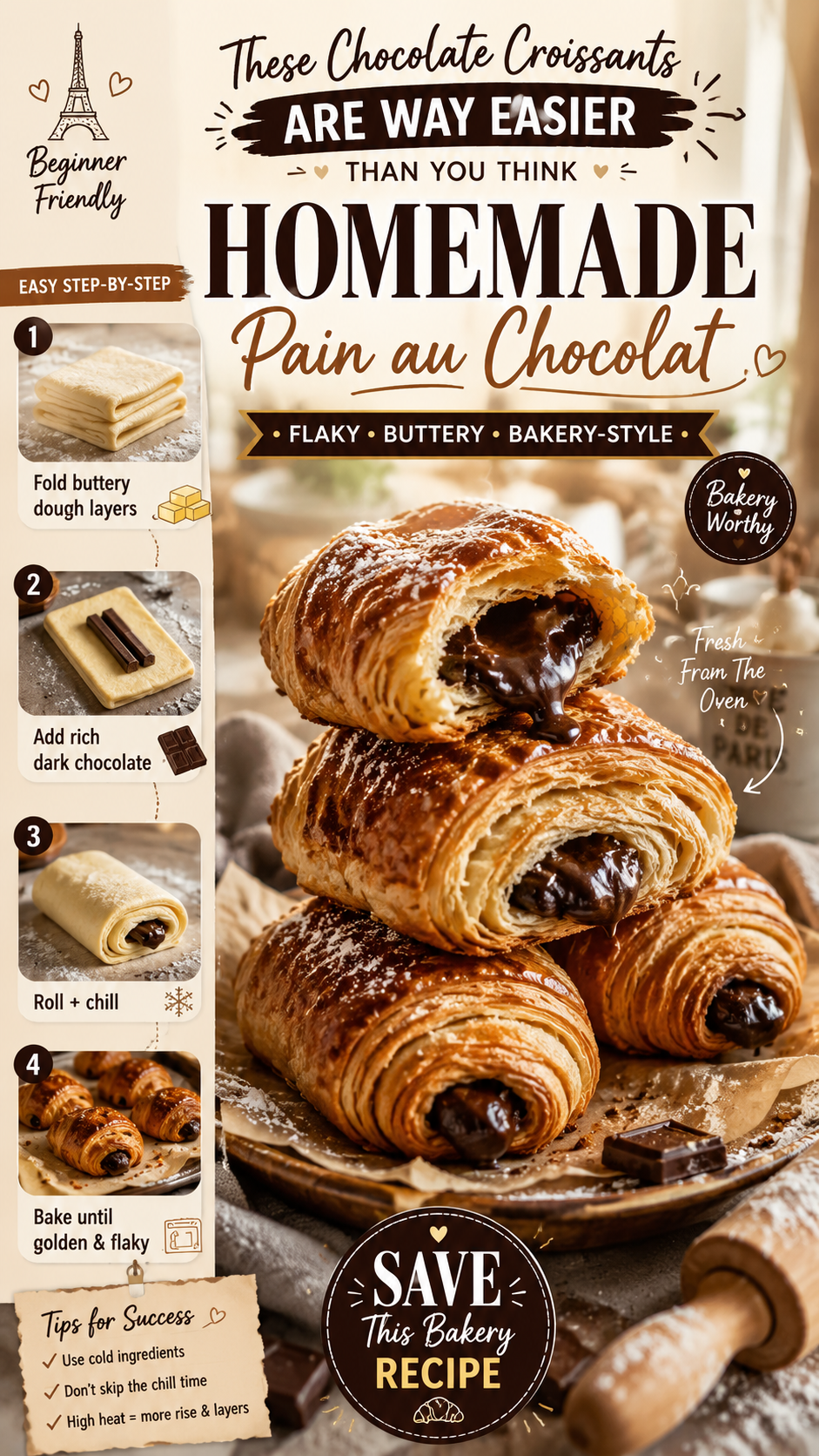
Buttery, flaky layers. A snap of dark chocolate in the center. That pull-apart moment that ruins you for any other breakfast forever.
I’ll be honest. For the longest time I assumed homemade chocolate croissants were one of those things only trained pastry chefs could actually pull off. The kind of recipe people pin but never actually make.
Then I tried it. And now I can’t stop.
Yes, there’s laminated dough. Yes, it takes some patience. But it’s not complicated. It just has a few steps spread out over time. And once you understand what you’re doing and why, the whole thing starts to feel genuinely fun.
These come out looking like something from a Parisian bakery window. Your kitchen will smell absolutely unreal. And the first one you pull apart while it’s still warm? That moment alone is worth the whole process.
Recipe at a Glance
| Detail | Info |
|---|---|
| Prep Time | 45 mins + chilling |
| Total Time | ~8 hours (with rests) |
| Bake Time | 18-20 mins |
| Yield | 12 croissants |
| Difficulty | Intermediate |
| Best For | Weekend project |
What You’ll Need
For the Dough
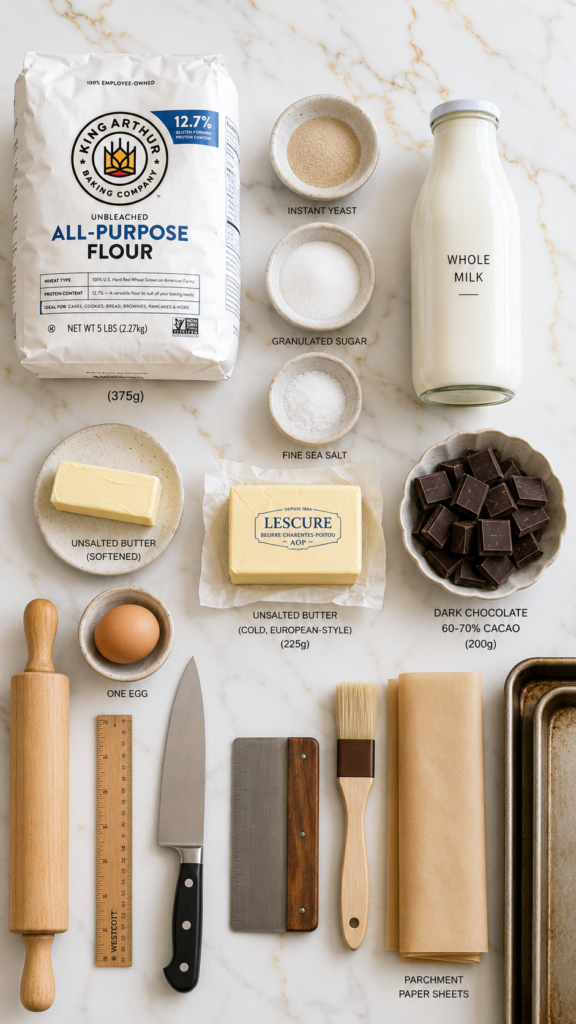
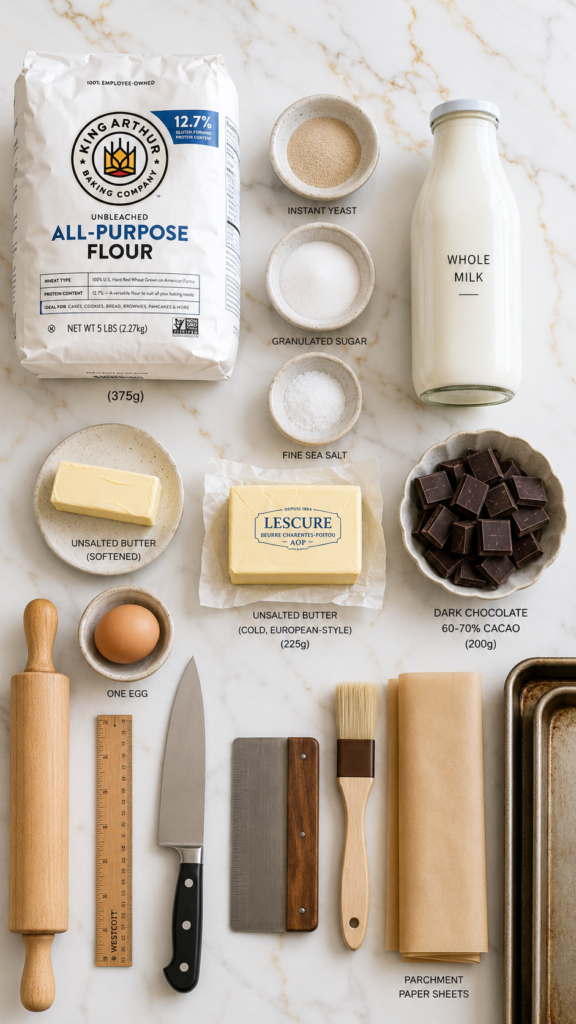
- 3 cups (375g) all-purpose flour, plus more for dusting
- 2 tsp instant yeast
- 3 tbsp granulated sugar
- 1.5 tsp fine sea salt
- 1 cup (240ml) whole milk, slightly warm
- 2 tbsp unsalted butter, softened
For the Butter Block (Lamination)
- 1 cup (225g) cold European-style unsalted butter (84% fat content)
For the Filling
- 7 oz (200g) dark chocolate bars or batons (60-70% cacao), broken into 12 equal pieces
For the Egg Wash
- 1 large egg
- 2 tbsp whole milk
Tools You’ll Need
- Stand mixer with dough hook (or large mixing bowl)
- Rolling pin
- Plastic wrap or reusable wrap
- Sharp chef’s knife or bench scraper
- Ruler or tape measure (seriously, it helps)
- Two large baking sheets
- Parchment paper
- Pastry brush
- Cooling rack
Pro Tips
Use European-style butter. Regular American butter has around 80% fat. European-style has 84%+. That extra fat is what gives you those dramatic, open, flaky layers. It’s genuinely not worth skimping on here.
Keep everything cold. The whole lamination process depends on your butter staying solid but pliable. The second it starts melting into the dough, you lose your layers. If things ever start feeling greasy or soft, wrap the dough and put it back in the fridge for 20 minutes.
Don’t rush the rests. The chilling steps aren’t just downtime. The dough needs to relax so the gluten doesn’t snap back when you roll it. Skip a rest and your dough will fight you the whole way.
Proof until visibly puffy. Under-proofed croissants bake up dense and bready. You’re looking for them to jiggle slightly when you shake the pan. That wobble is a very good sign.
Use chocolate batons if you can find them. They’re made specifically for croissants and sit beautifully inside the roll without bulging or breaking through the dough. Dark chocolate bars broken into pieces work totally fine too, just keep the pieces even.
How to Make Chocolate Croissants
Step 1: Make the Dough
In a stand mixer with a dough hook, combine the flour, yeast, sugar, and salt. Add the warm milk and softened butter. Mix on medium-low for 6-8 minutes until the dough is smooth but not sticky.
Shape it into a rough rectangle, wrap it tightly in plastic wrap, and refrigerate for at least 1 hour (up to overnight is great).
Step 2: Make the Butter Block
Place your cold butter between two sheets of parchment. Use a rolling pin to pound and shape it into a flat 7×7 inch square. Keep it in the fridge until it matches the dough temperature.
You want it cold enough to hold its shape but pliable enough not to crack. If it shatters when you bend it, warm it just slightly by leaving it at room temperature for a few minutes.
Step 3: Laminate the Dough
Roll the chilled dough out to roughly 14×7 inches. Place the butter block in the center, fold the dough over it like an envelope, and pinch the edges to seal.
Roll this package out into a long rectangle (about 8×20 inches), then do your first fold. This is a “letter fold” — fold the top third down, then the bottom third up over it. That’s one turn.
Wrap and refrigerate for 30 minutes. Repeat the rolling and folding process two more times for a total of three turns. Refrigerate after each one.
Step 4: Cut and Fill
After the final chill, roll the dough into a large rectangle about 1/4 inch thick. Trim the edges (this gives you cleaner layers) and cut into 12 long triangles.
Place one piece of chocolate at the base of each triangle. Roll the dough up from base to tip, keeping tension even as you go. Place on a parchment-lined baking sheet with the tip tucked underneath so it doesn’t unroll while baking.
Curve the ends slightly toward each other to get that classic croissant shape.
Step 5: Proof
Cover loosely with plastic wrap and let proof at room temperature for 2-3 hours. They should look noticeably puffier and jiggle slightly when you move the pan.
Step 6: Bake
Preheat your oven to 400°F (200°C). Whisk together the egg and milk, then brush it gently over each croissant. Avoid letting the wash drip down the cut sides or it’ll glue your layers together.
Bake for 18-20 minutes until deeply golden brown. Let them rest on a cooling rack for at least 10 minutes before eating. The inside needs a moment to set.
Substitutions and Variations
| Instead of… | Try… | Notes |
|---|---|---|
| Dark chocolate | Milk or white chocolate | Sweeter, great for kids |
| Dark chocolate | Nutella + hazelnuts | Richer, nuttier filling |
| All-purpose flour | Bread flour | Slightly chewier texture |
| Whole milk | Oat milk | Works fine, slight flavor change |
| Egg wash | Milk-only wash | Less shine but still browns nicely |
| Croissant shape | Pain au chocolat (rectangle) | Easier to roll, same great taste |
Make-Ahead Tips
This is one of the best make-ahead bakes there is.
- Dough overnight: After the first mix, the dough can chill in the fridge overnight. This actually develops better flavor.
- Laminated dough: After completing all three turns, you can freeze the dough (well-wrapped) for up to 1 month. Thaw overnight in the fridge before shaping.
- Shaped and unbaked: After rolling and filling, freeze the croissants on a sheet pan until solid, then transfer to a bag. Pull them out the night before, let them proof overnight in the fridge, then bake in the morning. This is the game-changer move.
Nutrition Breakdown
Per croissant (approximate):
| Nutrient | Amount |
|---|---|
| Calories | ~380 kcal |
| Total Fat | 22g |
| Saturated Fat | 13g |
| Carbohydrates | 39g |
| Sugar | 10g |
| Protein | 6g |
Dietary notes:
- Dairy-free adaptation: Sub European-style vegan butter (Miyoko’s works well) and oat milk. Results are close but layers are slightly less pronounced.
- Lower sugar: The dough only uses 3 tbsp sugar. Reduce chocolate sweetness by using 85%+ cacao.
Meal pairing ideas: A strong cortado, fresh fruit salad, or hot chocolate for the most indulgent morning of your year.
Leftovers and Storage
- Room temperature: Airtight container for up to 2 days. They’ll lose some crunch but still taste great.
- Freeze: Wrap individually and freeze for up to 1 month.
- To reheat: 5 minutes at 325°F (165°C) in the oven brings them right back. Avoid the microwave — it makes them soft and sad.
Frequently Asked Questions
Can I make these without a stand mixer?
Yes. Mix and knead by hand for about 10 minutes. It’s more of a workout but totally doable.
Why did my butter break through the dough?
The butter was either too cold (cracked) or too warm (soft). You’re aiming for butter that bends slightly without cracking. Think cold clay, not straight-from-the-fridge cold.
My layers didn’t show up. What went wrong?
Two likely culprits: the butter melted into the dough during lamination, or the croissants weren’t proofed long enough. Layers only open up when the dough has properly risen before baking.
Can I use store-bought puff pastry to shortcut this?
You can, and the result will taste fine. But puff pastry and croissant dough aren’t the same thing. Puff pastry has no yeast, so you won’t get that soft, chewy interior. Worth making from scratch at least once.
How do I know when they’re done baking?
Deep golden brown all over, not just on top. Lift one and check the underside. If it’s pale, give them another 2 minutes.
Can I use salted butter?
You can, but cut the added salt in the dough recipe in half. Salted butter also tends to have higher water content which can affect flakiness.
Wrapping Up
Homemade chocolate croissants take time. There’s no way around that. But they’re not hard. Every step is simple. It’s just a patient process.
And the payoff? Pull-apart, golden, buttery layers around melted dark chocolate. Fresh from your oven. That’s a weekend morning worth protecting.
Once you’ve done it once, you’ll understand why people make these on repeat. It becomes one of those recipes that lives permanently in your rotation.
Give it a try this weekend and come back to drop a comment below. Tell me how they turned out, what fillings you tried, or any questions that came up along the way. I read every single one. 🥐