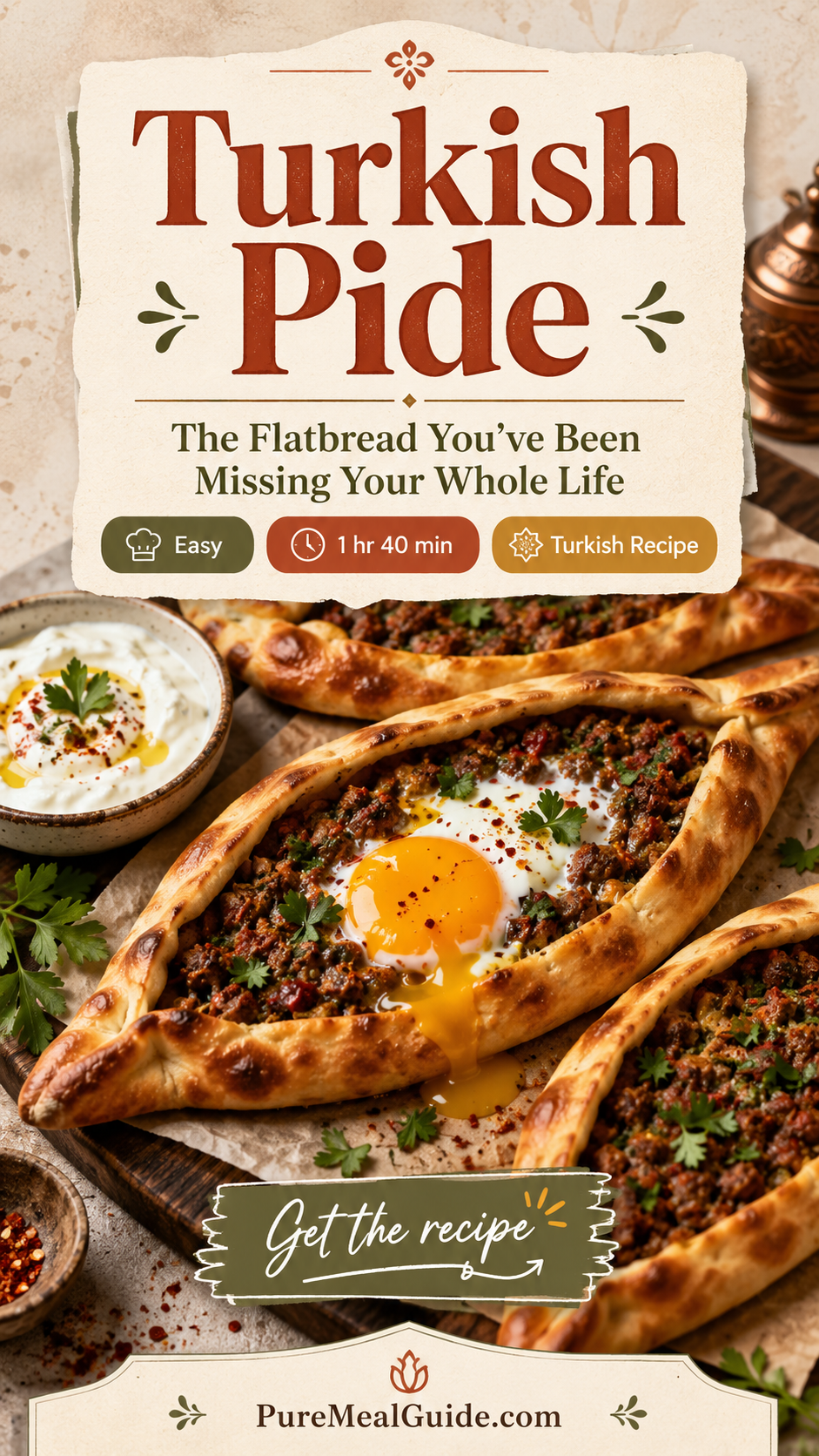
You’ve had pizza. You’ve had naan. But Turkish pide? That’s a whole other level.
It’s crispy on the outside, pillowy soft on the inside, and loaded with fillings that’ll make you completely forget pizza ever existed. 😮
And the shocking part? It takes less than 2 hours start to finish, and most of that is just letting the dough rest.
If you’ve never made pide before, this post walks you through everything: the dough, the fillings, the shaping technique, and the little tricks that make it taste like it came straight out of a wood-fired Turkish bakery (called a fırın).
Keep reading, because the pro tip in the middle of this post alone is a total game-changer. 👇
Recipe at a Glance
| Detail | Info |
|---|---|
| Prep Time | 25 minutes |
| Rise Time | 1 hour |
| Cook Time | 15 minutes |
| Total Time | 1 hour 40 minutes |
| Servings | 4 pide (serves 4) |
| Difficulty | Easy-Medium |
| Cuisine | Turkish |
What Is Turkish Pide, Exactly?
Pide (pronounced pee-deh) is Turkey’s answer to flatbread, and it’s been a staple in Turkish cuisine for centuries.
It’s shaped like a long oval or boat, topped with seasoned meat, cheese, eggs, or vegetables, then baked at high heat until the edges are beautifully golden and slightly charred.
Street vendors sell it fresh out of the oven across Turkey, sliced into pieces and wrapped in paper. It’s cheap, filling, and wildly flavorful.
Fun fact: pide is actually older than modern pizza. It dates back to ancient Anatolian bread traditions, long before Neapolitan pizza was even a concept.
What You’ll Need
For the Dough
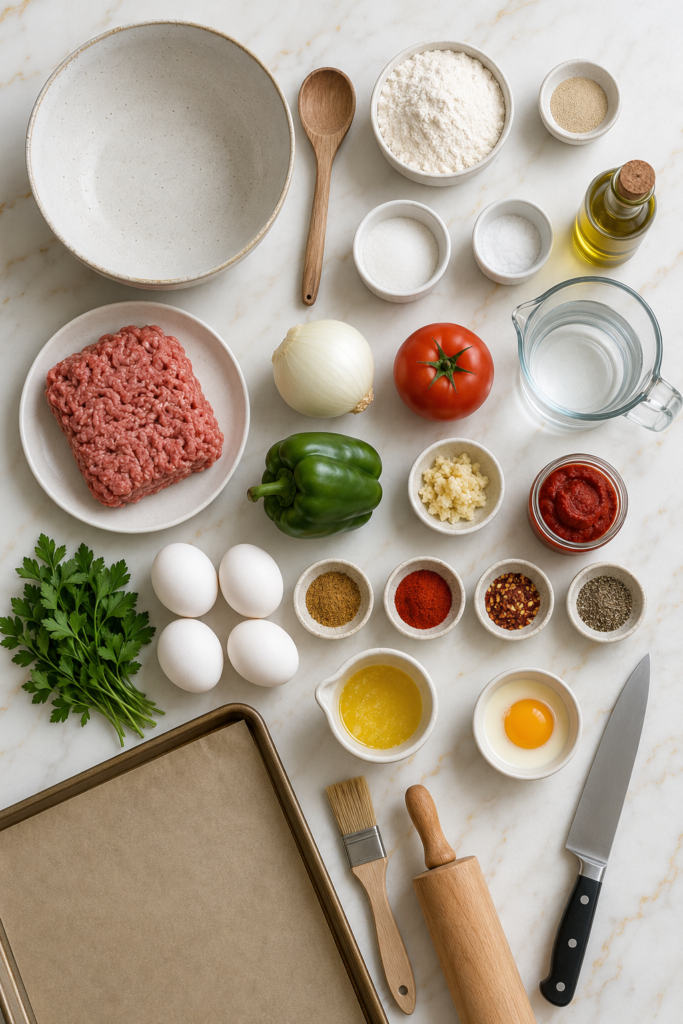
- 3 cups (375g) all-purpose flour, plus extra for dusting
- 1 packet (7g / 2¼ tsp) instant dry yeast
- 1 tsp sugar
- 1 tsp salt
- 1 tbsp olive oil
- 1 cup (240ml) warm water (about 110°F / 43°C)
For the Minced Meat Filling (Kiymali Pide)
- 1 lb (450g) ground lamb or beef (80/20 fat ratio recommended)
- 1 medium white onion, finely diced
- 1 medium tomato, finely diced and drained
- 1 medium green bell pepper, finely diced
- 3 cloves garlic, minced
- 2 tbsp tomato paste
- 1 tsp cumin
- 1 tsp sweet paprika
- ½ tsp red pepper flakes (pul biber, if available)
- ½ tsp black pepper
- 1 tsp salt
- 2 tbsp olive oil
- Small handful fresh flat-leaf parsley, finely chopped
For the Egg Topping (Optional but Recommended)
- 4 eggs (one per pide)
For Brushing and Finishing
- 1 egg yolk + 1 tbsp milk (egg wash for the crust edges)
- 1 tbsp butter, melted (for brushing right after baking)
- Fresh parsley for garnish
Tools You’ll Need
- Large mixing bowl
- Wooden spoon or stand mixer with dough hook
- Clean kitchen towel or plastic wrap
- Rolling pin
- Large baking sheet or pizza stone
- Parchment paper
- Pastry brush
- Sharp knife or pastry wheel
- Oven (preheated to 475°F / 245°C)
Pro Tips
These are the tips that turn a good pide into a great one.
1. Use a pizza stone if you have one. The intense bottom heat mimics a wood-fired oven and gives you that crispy base. If you don’t have one, put a heavy baking sheet in the oven while it preheats and slide your pide onto it.
2. Don’t skip draining the tomatoes. Watery filling = soggy pide. Dice your tomatoes, throw them in a sieve, and let them drain for 10 minutes while you make the dough.
3. Pinch the ends tightly. The boat shape needs to hold during baking. Pinch those end tips firmly and press them down so the filling doesn’t spill out into a mess.
4. Less filling than you think. This is where most first-timers go wrong. A thin, even layer of filling cooks properly and gives you a crispy base. Overstuffed pide turns soggy and doesn’t cook through.
5. Butter immediately after baking. The second it comes out of the oven, brush it with melted butter. This is non-negotiable in Turkish bakeries and makes the crust taste extraordinary.
How to Make Turkish Pide
Step 1: Make the Dough
- In a large bowl, combine warm water, sugar, and yeast. Stir and let it sit for 5 minutes until foamy. If it doesn’t foam, your yeast is dead. Start over with fresh yeast.
- Add flour, salt, and olive oil. Mix until a shaggy dough forms.
- Turn it onto a floured surface and knead for 8-10 minutes until smooth and slightly tacky.
- Place in a lightly oiled bowl, cover with a damp towel, and let it rise in a warm spot for 1 hour until doubled in size.
Step 2: Prepare the Filling
- Heat olive oil in a pan over medium-high heat.
- Add onion and cook for 3-4 minutes until softened.
- Add garlic and cook for 30 seconds.
- Add the ground meat and cook, breaking it apart, until browned.
- Stir in tomato paste, diced tomato, green pepper, cumin, paprika, red pepper flakes, black pepper, and salt.
- Cook for another 5 minutes until the mixture is fragrant and most of the liquid has evaporated.
- Remove from heat, stir in parsley, and let it cool completely before using. Hot filling = deflated dough.
Step 3: Shape the Pide
- Preheat your oven to 475°F (245°C) with a pizza stone or baking sheet inside.
- Divide the dough into 4 equal portions.
- On a lightly floured surface, roll each portion into a thin oval shape, roughly 12 inches long and 6 inches wide.
- Transfer to parchment paper.
- Spread a thin, even layer of filling down the center, leaving a 1.5-inch border around the edges.
- For the egg version: make a small well in the center of the filling.
- Fold the long edges up and over slightly, pressing into the filling. Pinch the ends into sharp points.
- Brush the exposed dough edges with egg wash.
Step 4: Bake
- Slide the pide (on the parchment) onto your preheated stone or baking sheet.
- Bake for 10 minutes.
- If adding an egg: crack it into the well and bake for another 4-5 minutes until the white is set but the yolk is still runny.
- Remove from oven and immediately brush the crust edges with melted butter.
- Scatter fresh parsley on top and serve immediately.
Substitutions and Variations
Fillings
| Filling Type | Turkish Name | What Goes In |
|---|---|---|
| Minced meat + egg | Kiymali yumurtali | Ground lamb, onion, tomato, egg |
| Cheese | Kaşarlı | Melted kaşar or mozzarella, sometimes egg |
| Spinach + cheese | Ispanakli | Wilted spinach, white cheese (beyaz peynir), egg |
| Mixed vegetables | Sebzeli | Zucchini, peppers, tomato, herbs |
| Sucuk (spiced sausage) | Sucuklu | Turkish sucuk sausage, tomato, egg |
Dietary Swaps
- Gluten-free: Use a 1:1 gluten-free flour blend. The texture won’t be as chewy but it works.
- Vegetarian: Skip the meat and load up on the spinach-cheese version.
- Dairy-free: Skip the butter finish and use olive oil instead. Use dairy-free cheese if making the cheese version.
Make-Ahead Tips
- The dough: Make it the night before and do a slow cold rise in the fridge overnight. Pull it out 30 minutes before shaping.
- The filling: Cook and cool the meat filling up to 2 days ahead. Store covered in the fridge.
- Shaped but unbaked: You can assemble the pide and refrigerate for up to 2 hours before baking. Bring to room temp for 15 minutes first.
Nutrition (Per Pide, Approximate)
| Nutrient | Amount |
|---|---|
| Calories | ~520 kcal |
| Protein | 28g |
| Carbohydrates | 52g |
| Fat | 20g |
| Fiber | 3g |
| Sodium | 680mg |
Values are estimates for the minced meat version with egg.
Meal Pairing Suggestions
Pide is filling on its own, but if you’re making it a full spread:
- Cacik (Turkish yogurt with cucumber and garlic) as a cooling dip
- Shepherd’s salad (coban salatasi): Tomato, cucumber, onion, parsley, olive oil, lemon
- Ayran: The traditional cold yogurt drink Turks serve with pide. Don’t skip it.
- Pickled vegetables on the side for a sharp contrast
Leftovers and Storage
Storing: Leftover pide keeps in an airtight container in the fridge for up to 2 days.
Reheating: The oven is your best friend here. A microwave will turn the crust rubbery. Reheat at 375°F (190°C) for 6-8 minutes directly on the oven rack.
Freezing: Freeze fully baked pide (without egg topping) for up to 1 month. Wrap each piece tightly in foil, then place in a freezer bag. Reheat from frozen at 400°F (200°C) for 12-15 minutes.
FAQ
Can I use store-bought pizza dough?
Yes. It won’t taste exactly the same, but it works in a pinch. Let it come to room temperature before shaping so it stretches easily.
What cheese is used in Turkish pide?
Traditionally, kaşar peyniri (a mild, semi-hard yellow cheese similar to young cheddar) or beyaz peynir (a salty white cheese similar to feta) are used. Mozzarella is a widely accepted substitute.
My dough keeps shrinking when I roll it. What am I doing wrong?
The gluten is too tight. Let the dough rest for 10 minutes after you roll it, then come back and stretch it again. It will relax and hold its shape much better.
Can I make pide without a pizza stone?
Yes. Preheat a heavy baking sheet (upside down) in the oven so it’s blazing hot, then slide your pide directly onto it. You’ll get a similar effect.
Is pide the same as lahmacun?
No, they’re different. Lahmacun is thinner, crispier, and topped with a very thin layer of spiced minced meat, more like a Turkish flatbread pizza. Pide is thicker, softer, and has raised edges that hold the filling in.
What is pul biber?
It’s Turkish red pepper flakes, also called Aleppo pepper. It’s milder and fruitier than regular chili flakes. You can find it at Middle Eastern grocery stores or online. Regular red pepper flakes work fine as a substitute.
Wrapping Up
Turkish pide is one of those recipes that sounds fancy, but once you’ve made it once, you’ll realize it’s just really satisfying bread work. 🍞
The dough is forgiving. The filling is flexible. And the result is something that genuinely impresses everyone at the table.
Give it a try this weekend. And when you do, drop a comment below! Tell me which filling you went with, how the crust turned out, or any questions you ran into along the way.
I read every single one. 👇