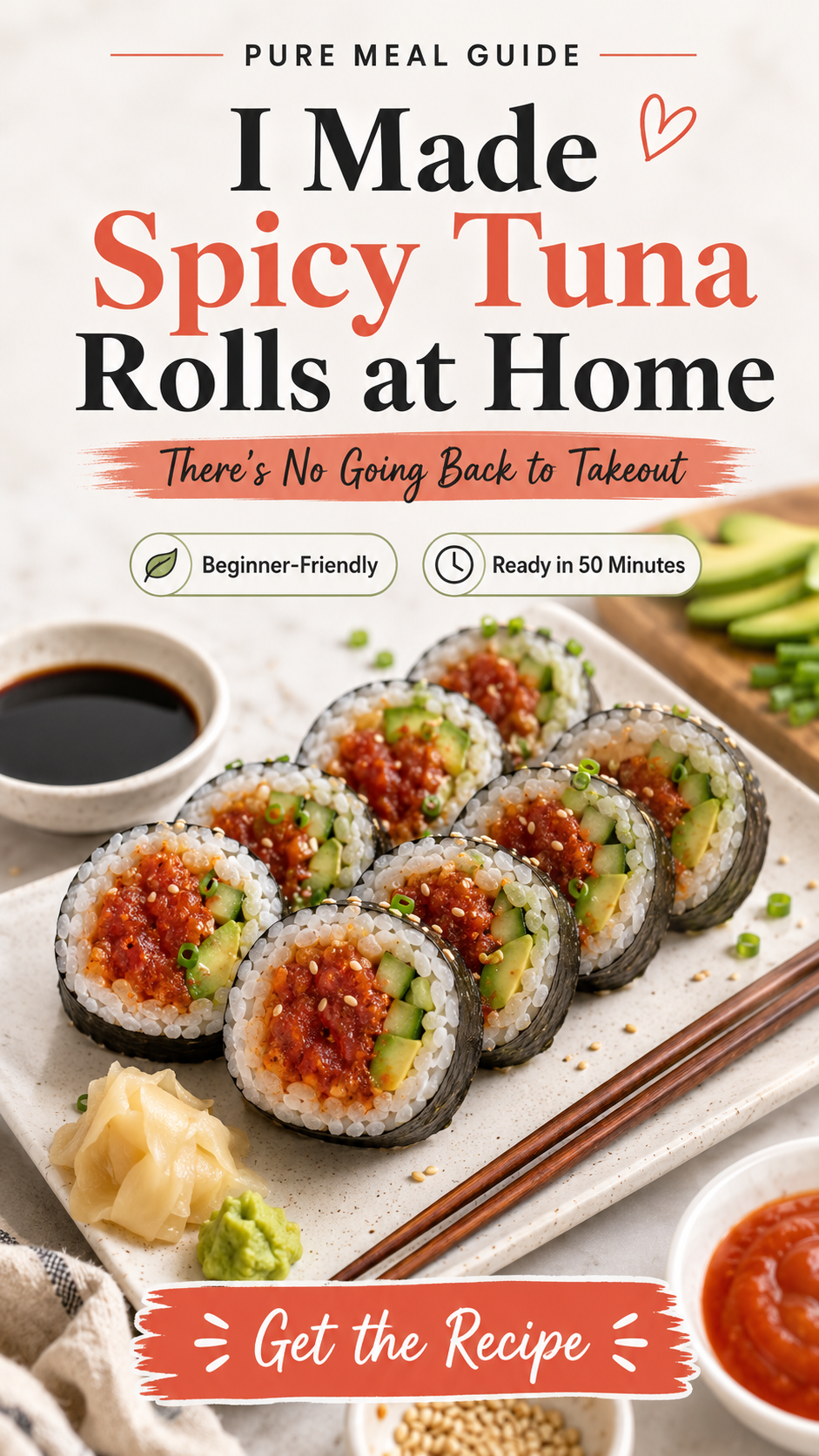
You spend $18 on a spicy tuna roll at a restaurant. You eat it in four bites. You immediately want more.
Sound familiar?
Here’s what nobody tells you: making spicy tuna rolls at home is genuinely not that hard. And once you do it once, you’ll wonder why you waited this long.
The flavors hit differently when you make them yourself. The fish is fresher. The rice is warm. The spice level is yours to control. Plus, you can make an entire platter for less than what one restaurant roll costs.
Stick around, because I’m also going to share some things most recipes skip over that’ll make a real difference for first-timers.
Recipe at a Glance
| Detail | Info |
|---|---|
| Prep Time | 30 minutes |
| Cook Time | 20 minutes (rice) |
| Total Time | ~50 minutes |
| Servings | 4 rolls (24–32 pieces) |
| Difficulty | Beginner-friendly |
| Cuisine | Japanese-American |
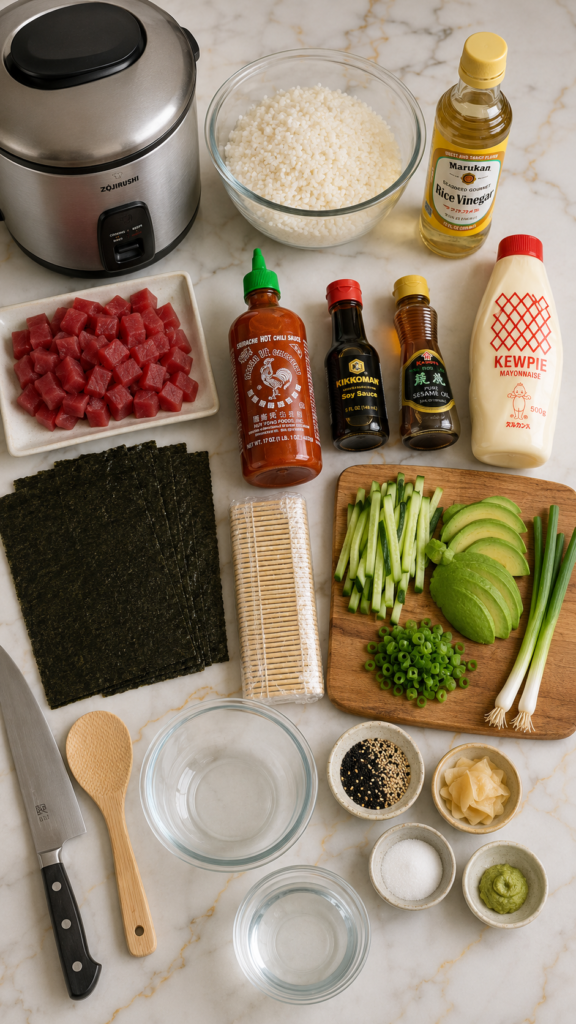
What You’ll Need
For the Sushi Rice
- 2 cups short-grain Japanese sushi rice
- 2 cups water
- 3 tablespoons rice vinegar
- 1 tablespoon sugar
- 1 teaspoon salt
For the Spicy Tuna Filling
- 8 oz (225g) sushi-grade tuna, finely diced
- 3 tablespoons Japanese mayonnaise (Kewpie)
- 1–2 tablespoons sriracha (adjust to your heat level)
- 1 teaspoon soy sauce
- 1 teaspoon sesame oil
- 2 green onions (scallions), thinly sliced
For Assembly
- 4 full sheets of nori (roasted seaweed)
- 1 tablespoon sesame seeds (white or black)
- 1/2 cucumber, julienned (optional but highly recommended)
- 1 avocado, sliced thin (optional)
For Serving
- Soy sauce
- Pickled ginger
- Wasabi
Tools You’ll Need
- Rice cooker or medium saucepan with a tight-fitting lid
- Sharp chef’s knife
- Bamboo sushi rolling mat (makisu)
- Plastic wrap (to wrap the mat so rice doesn’t stick)
- Large mixing bowls (x2)
- Wooden spoon or rice paddle
- Cutting board
Pro Tips
These are the things that’ll actually save your roll from falling apart or tasting flat.
1. The rice is everything. Seriously. Sushi rice that’s too wet, too dry, or not seasoned properly will ruin the whole thing before you even touch the fish. Season it while it’s still hot so the vinegar absorbs evenly.
2. Buy sushi-grade tuna, not just “fresh” tuna. “Sushi-grade” means the fish has been frozen to kill parasites, making it safe to eat raw. Regular fresh tuna from the fish counter is not the same thing. Ask your fishmonger directly if it’s safe for raw consumption, or buy from a trusted Japanese grocery store.
3. Wet your hands before touching the rice. Rice sticking to your hands is the fastest way to lose your mind mid-roll. Keep a small bowl of water nearby and wet your fingers every time before spreading rice on the nori.
4. Don’t overfill. One of the most common mistakes. A thin, even layer of filling rolls up clean. A heaping mound turns into a mess that squirts out the sides when you cut it. Less is genuinely more here.
5. Let the roll rest before cutting. After rolling, let it sit for about 60 seconds before slicing. This helps it hold its shape and makes cleaner cuts.
Substitutions and Variations
Not into raw fish? No problem.
- Swap tuna for: canned tuna (for a cooked version), salmon, or imitation crab
- Make it dairy-free: it already is! Just double-check your mayo brand
- Lower the heat: use just 1 teaspoon of sriracha or skip it and add a small drizzle of chili oil
- Crank the heat: add a pinch of cayenne or use sambal oelek instead of sriracha
- No Kewpie mayo? Regular mayo works in a pinch, but Kewpie has a richer, slightly sweeter flavor that makes a noticeable difference
- Make it a California-style roll: add avocado and cucumber inside, roll it inside-out (rice on the outside)
- Gluten-free option: use tamari instead of soy sauce in the filling
Make-Ahead Tips
Sushi rice doesn’t love the fridge. Once it’s cold, it gets hard and loses that sticky texture you need for rolling.
That said, here’s what you can prep ahead:
- The spicy tuna filling can be made up to 4 hours ahead and kept covered in the fridge
- Cucumber and avocado can be prepped and stored separately (keep avocado from browning with a squeeze of lemon juice)
- Cook the rice the same day, ideally within an hour or two of rolling
How to Make Spicy Tuna Rolls
Step 1: Cook the Sushi Rice
Rinse your rice under cold water until the water runs clear. This removes excess starch and keeps the rice from getting gummy.
Cook rice with 2 cups water either in a rice cooker or on the stovetop (bring to a boil, then reduce heat to low, cover, and cook for 15 minutes, then let it steam off the heat for another 10 minutes with the lid on).
While the rice is still hot, mix your rice vinegar, sugar, and salt in a small bowl until dissolved. Fold this into the rice gently using a rice paddle or wooden spoon. Fan the rice as you fold to cool it down quickly. Set aside.
Step 2: Make the Spicy Tuna Filling
Dice your sushi-grade tuna into small pieces, about 1/4-inch cubes.
In a bowl, combine:
- Diced tuna
- Kewpie mayo
- Sriracha
- Soy sauce
- Sesame oil
- Sliced scallions
Mix gently. Taste it. Adjust spice and seasoning as needed. Set in the fridge while you prep your rolling station.
Step 3: Set Up Your Rolling Station
Lay out your bamboo mat on a flat surface. Wrap it tightly in plastic wrap so rice doesn’t get stuck in the bamboo.
Have nearby:
- A bowl of water for your hands
- Your seasoned rice
- Your spicy tuna filling
- Cucumber and avocado (if using)
- Sesame seeds
- A sharp knife
Step 4: Roll It Up
Place one sheet of nori shiny-side down on the wrapped bamboo mat. The nori should align with the bottom edge of the mat.
Wet your hands, then grab a handful of rice (roughly 3/4 cup) and spread it evenly across the nori, leaving about 1 inch of nori uncovered at the top edge. Keep the layer thin.
Sprinkle sesame seeds over the rice.
Now flip the nori over so the rice is face-down on the mat (this gives you a roll with nori on the outside). The nori side is now facing up.
Add a line of spicy tuna filling across the center, followed by a few strips of cucumber and avocado.
To roll: Lift the bottom edge of the mat with your thumbs while holding the filling in place with your fingers. Roll forward firmly but not too tight, pressing as you go. Once you’ve rolled it fully, give it a gentle squeeze to seal it.
Step 5: Slice and Serve
Wet your sharp knife before each cut. Slice the roll in half, then cut each half into 3–4 equal pieces.
Serve immediately with soy sauce, pickled ginger, and wasabi.
Nutritional Breakdown (Per Roll, Approximate)
| Nutrient | Amount |
|---|---|
| Calories | ~320 kcal |
| Protein | 18g |
| Carbohydrates | 42g |
| Fat | 8g |
| Sodium | ~580mg |
| Omega-3s | High (from tuna) |
Values will vary based on the amount of mayo and avocado used.
Meal Pairing Suggestions
Spicy tuna rolls are honestly great on their own, but if you’re turning this into a full spread:
- Miso soup alongside the rolls is a classic for good reason
- Edamame with sea salt as a starter
- Gyoza (pan-fried dumplings) if you want to go all in
- Matcha ice cream for dessert
Leftovers and Storage
Sushi is best eaten the day it’s made. The rice hardens in the fridge and the nori gets chewy.
That said, if you have leftovers:
- Store rolls in an airtight container in the fridge for up to 24 hours
- Let them come to room temperature for about 10–15 minutes before eating (never microwave)
- The spicy tuna filling alone keeps in the fridge for up to 24 hours in a sealed container
FAQ
Do I have to use sushi-grade tuna?
Yes, if you’re eating it raw. Sushi-grade fish has been frozen at temperatures that kill parasites. Don’t skip this detail.
Can I make these without a bamboo mat?
You can try using a clean kitchen towel wrapped in plastic wrap, but a bamboo mat makes a huge difference in getting a tight, even roll. They’re about $5 online and totally worth it.
My rolls keep falling apart. What am I doing wrong?
A few possible culprits: rice is too dry, you’re not sealing the edge tightly, or you’re cutting before it’s had a moment to rest. Wet the uncovered nori edge lightly before sealing to help it stick.
Can I use brown rice instead of white sushi rice?
You can, but the texture will be different. Brown rice doesn’t get as sticky, which makes rolling harder. Totally doable if you prefer it, just know the roll may be a bit looser.
What if I can’t find Kewpie mayo?
Regular mayo plus a tiny squeeze of lemon juice and a pinch of sugar gets you surprisingly close to the flavor.
Is this kid-friendly?
Skip the sriracha for younger kids and it becomes a simple tuna mayo roll that most kids actually love. You could also substitute canned tuna (well-drained) for a fully cooked version.
How do I know if my tuna is fresh enough?
It should smell clean and ocean-like, not “fishy.” The color should be deep red or pink. If it smells off at all, don’t use it raw.
Wrapping Up
Making spicy tuna rolls at home feels like crossing some invisible line the first time. Like, am I really doing this?
And then you take that first bite of a roll you made yourself and something shifts. 😌
The flavors are brighter. The satisfaction is real. And you just made something that looks like it came from a restaurant, in your own kitchen, probably in under an hour.
Now go try it. And when you do, come back and leave a comment below. Tell me how it went, what you changed, what you’re obsessed with, what you’d do differently. I genuinely love hearing about your kitchen adventures, and your experience might help someone else who’s nervous about trying this for the first time.